How Much Is Ultherapy in Korea: A Gangnam Doctor's Honest First-Timer's Guide
Dr. Hyunji Kim
2026-08-048 min read
Medically reviewed by Dr. Hyunji Kim · Last reviewed

How much is Ultherapy in Korea, and is it actually worth flying for? I get this question almost every week from patients messaging from Singapore, the US, the Middle East, and beyond — so let me answer it honestly, without the marketing gloss.
I'm Dr. Hyunji Kim, director at Delphic Clinic in Gangnam. I've performed Ultherapy on hundreds of faces, and I'm going to walk you through what it really does, who it genuinely suits, what to expect on the day, and what it costs — including who I tell not to bother.
What Ultherapy actually is — in plain language
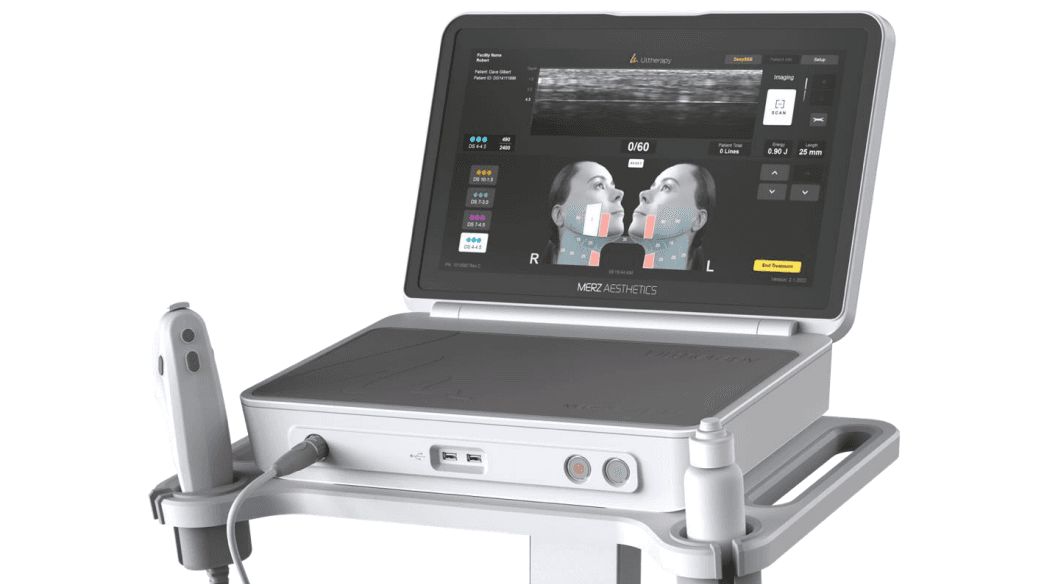
Ultherapy uses micro-focused ultrasound to deliver precise heat to the deeper support layers of your skin — including the SMAS, the same layer surgeons tighten in a facelift. That controlled injury triggers your body to build fresh collagen, which lifts and firms over the following weeks. What makes genuine Ulthera special is its ultrasound imaging: we can actually see the layers we're treating, so energy lands where it should.
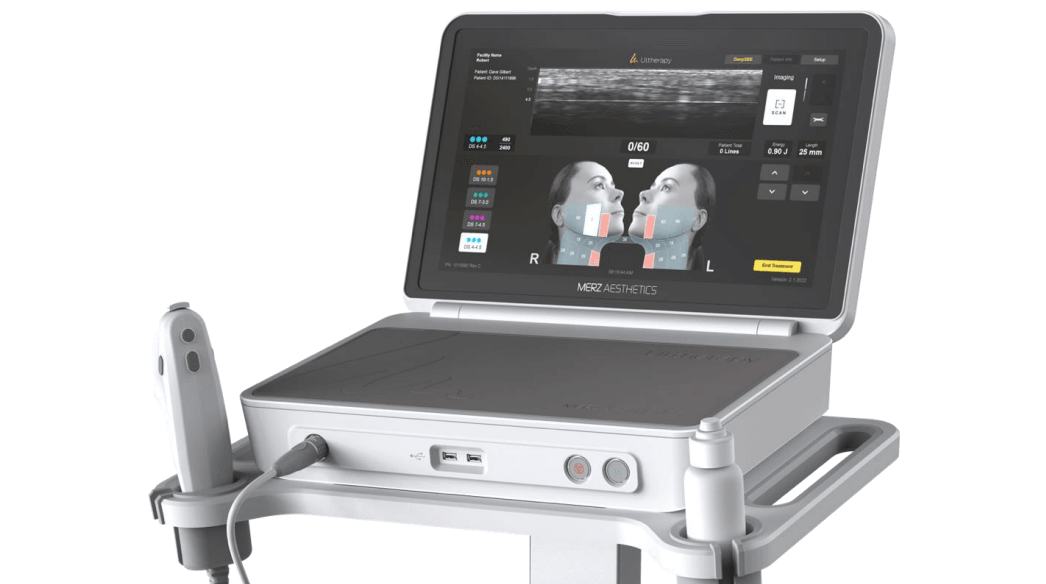
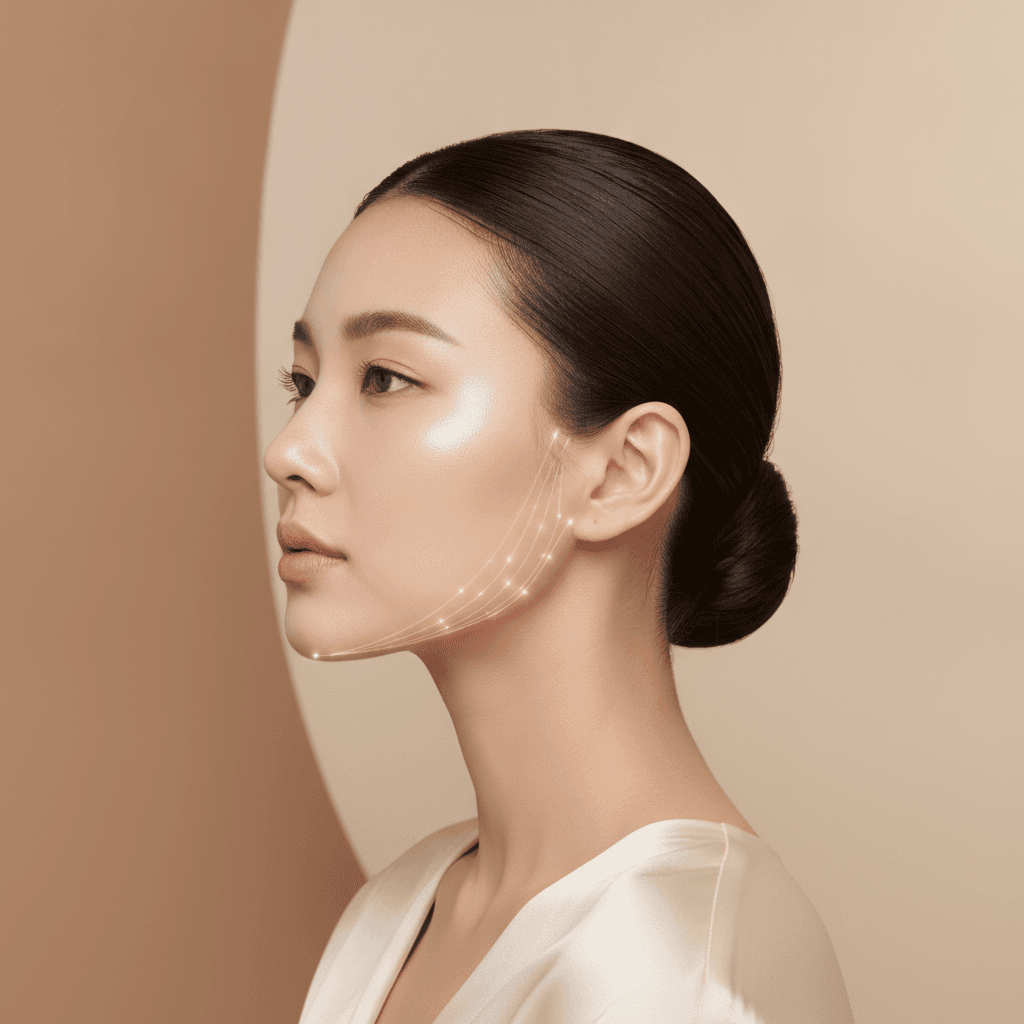
Here's the honest part: Ultherapy is not a facelift. It won't remove significant hanging skin or give you the dramatic result of surgery. It's a tightening and lifting treatment for people who want a firmer, more defined jawline and brow without going under the knife — and it works with your natural anatomy, not against it.
Who Ultherapy in Korea is really for
In my chair, the patients who love their Ultherapy results tend to share a few things:
- You're in your 30s to 50s and starting to notice softening along the jawline or a heavier lower face.
- You want a firmer brow, tighter neck, or more defined cheek without surgery or downtime.
- You have mild-to-moderate skin laxity — not severe sagging.
- You'd rather stimulate your own collagen than commit to permanent surgical change.
- You're planning a one-day-friendly treatment during a trip to Seoul.
And who I steer elsewhere: if you have significant, heavy sagging or a lot of excess skin, I'll tell you honestly that Ultherapy alone won't satisfy you — a surgical consultation is the right path. If you mainly want fine lines or glow, skin boosters or lasers suit you better. I'd rather lose the booking than have you disappointed.
How Ultherapy compares — an honest comparison
Ultherapy sits in a family of lifting options. Here's how I explain the differences to patients weighing up ulthera lifting versus the alternatives:
In short: Ultherapy is the precise, no-downtime tightening option that reaches deep. Many patients combine it with threads for structure, or with skin boosters for surface quality.
Before and after: what's realistic
Let me set honest expectations. Ultherapy is not instant — you may notice a slight tightening right away, but the real result appears gradually as new collagen forms over 8–12 weeks, and continues to refine for a few months. Individual results vary a lot depending on your starting skin, age, and how your body responds. Anyone promising a dramatic same-day lift is overselling it.
Get a free 1:1 consultation
Message our English-speaking team — same price as locals, no pressure.
What to expect — step by step
- 1
1. Free consultation
I assess your skin laxity, facial structure, and goals — and tell you honestly if Ultherapy is right for you or if something else fits better.
- 2
2. Numbing & prep
We cleanse the area and apply numbing cream so the session stays comfortable. We map the treatment zones together.
- 3
3. The session
Using the genuine Ulthera device with imaging, I deliver the ultrasound pulses. Eye areas are quick; a full face takes around 30–60 minutes.
- 4
4. Back to your day
No real downtime — mild redness or tenderness may appear briefly. You can wear makeup, fly, or explore Seoul the same day.
- 5
5. Results build over weeks
Collagen forms over 2–3 months. We schedule a review so I can see how your skin responded and advise on maintenance.
How we do Ultherapy at Delphic — and why it matters
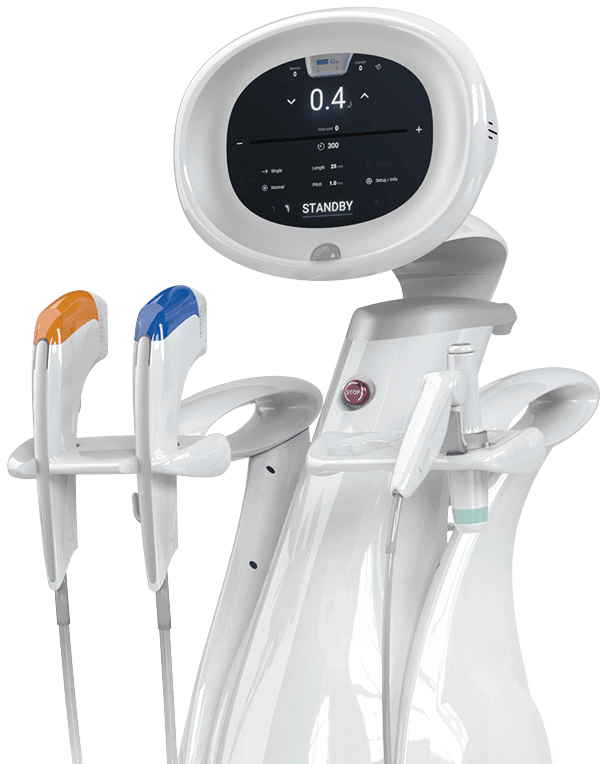
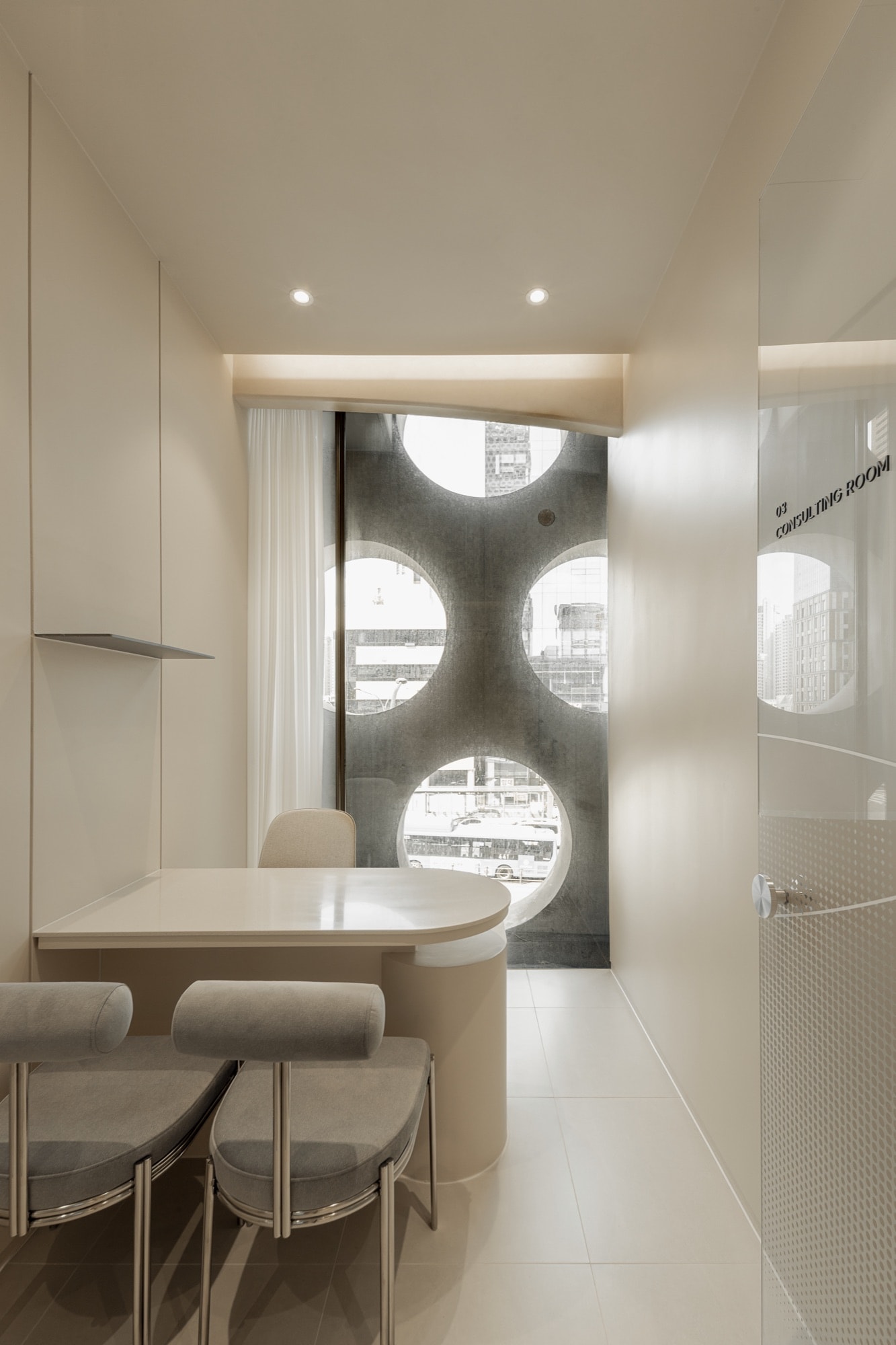
Every Ultherapy session at Delphic is doctor-led, on a genuine Ulthera device — this matters because counterfeit or off-brand 'HIFU' machines are common and can't match the precision or safety. I choose the depth and energy based on your actual anatomy, seen through the ultrasound imaging, rather than a fixed protocol. That personalization is the difference between a flat result and a natural lift.
How much does Ultherapy cost in Korea?
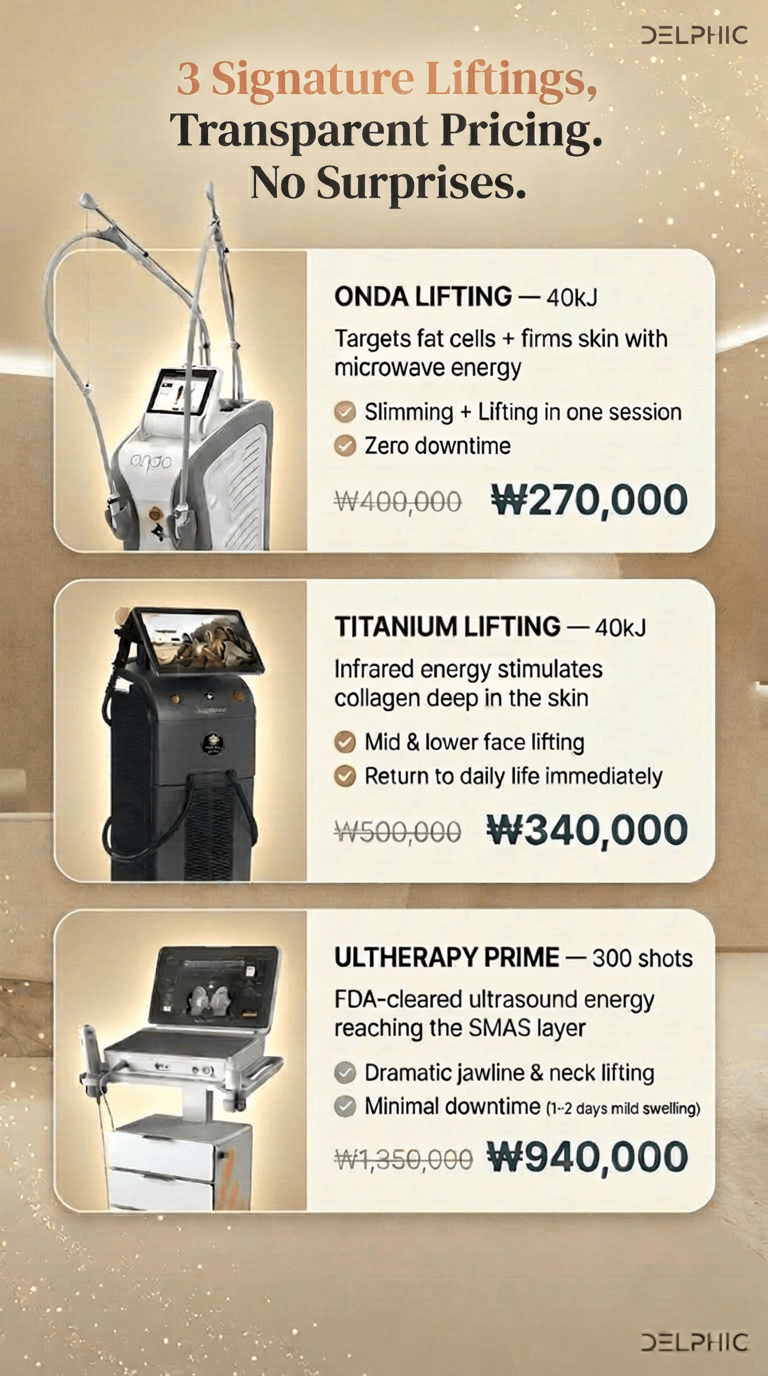
Ultherapy pricing in Korea is usually based on the number of shots and the area treated. Prices vary widely between clinics — but beware of very cheap 'Ultherapy' that's actually a cheaper HIFU device. Here are our genuine, transparent prices:
| EYE Ultherapy Prime 200 shots | ₩1,350,000$980 |
| FACE Ultherapy Prime 300 shots | ₩1,350,000$980 |
| Ultherapy Prime 300 shots (First-visit trial) | ₩940,000$680 |
| Ultherapy Prime 100 shots | ₩450,000$330 |
Coming from overseas? Here's how we make it easy
We host international patients every week. We have on-site English and Chinese interpreters, so nothing gets lost in translation during your consultation. Ultherapy is one-day friendly — you can consult, treat, and return to your itinerary the same day. We're a direct walk from Sinnonhyeon Station Exit 3, and you pay the same price as any local patient.
Start with a free 1:1 consultation
Verified Google reviews
4.7 · 260 Google reviewsI received ONDA lifting and Juvelook Skin treatment at Delpic Clinic. Before the procedure, Dr. K carefully examined my skin condition and explained everything in a kind and easy-to-understand way, which made me feel very comfortable and reassured. During the treatment, I could really tell that Dr. K was highly skilled, so I felt confident and at ease throughout the entire process. Overall, I was very satisfied with my experience. It’s definitely a clinic I would love to visit again.
Before you book anything, come in for a free, no-pressure 1:1 consultation. I'll look at your skin honestly and tell you whether Ultherapy is your best option — or whether something else, or nothing at all, would serve you better. That's how I'd want to be treated.
Get a free 1:1 consultation
Message our English-speaking team — same price as locals, no pressure.
Thanks for reading — I hope this answered your questions honestly. If you're considering Ultherapy in Seoul, come say hello. — Dr. Hyunji Kim, Delphic Clinic, Gangnam, Seoul.
Frequently asked questions
Does Ultherapy hurt?
You feel brief warm, prickly pulses as the ultrasound reaches the deeper layers — that sensation actually means it's working. We numb the area first and adjust energy to your comfort, so most patients describe it as very manageable rather than painful. The eye/face areas are quick and it's over before you know it.
How long does Ultherapy last?
Results typically last about 12–18 months, sometimes longer, because Ultherapy stimulates your own collagen rather than adding filler. Since we're all aging every day, most patients repeat once a year to stay ahead. Your baseline skin quality and lifestyle affect how long it holds.
How does Ultherapy compare to Shurink or thread lifting?
Roughly: Ultherapy is FDA-cleared micro-focused ultrasound with visualization, so it's precise and reaches the SMAS layer. Shurink is a gentler, more budget-friendly HIFU. Thread lifting gives a more immediate mechanical lift but is more invasive. Many patients combine ultrasound tightening with threads for structure.
Is there downtime after Ultherapy?
No real downtime. You may have mild redness, slight tenderness, or occasional temporary puffiness for a day or two, but you can fly, work, and wear makeup the same day. It's genuinely one-day friendly.
How many Ultherapy sessions do I need?
Usually one session, then a review as collagen builds over 2–3 months. Some patients with more laxity benefit from a second session or a combined plan. We decide this together at your consultation, not by upselling.
How much does Ultherapy cost in Korea?
At Delphic, EYE Ulthera Prime (200 shots) is ₩1,350,000 and FACE Ulthera Prime (300 shots) is ₩1,350,000. See the price section for details — and it's the same price for locals and visitors, no foreigner mark-up.
Written by
Dr. Hyunji Kim
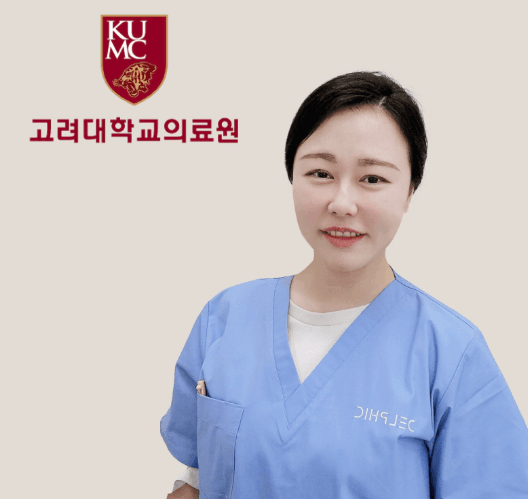
Dr. Hyunji Kim is the director and lead physician at Delphic Clinic in Gangnam, Seoul. She trained at Korea University Medical Center and personally performs consultations and procedures for both local and international patients.
Read next

Lifting
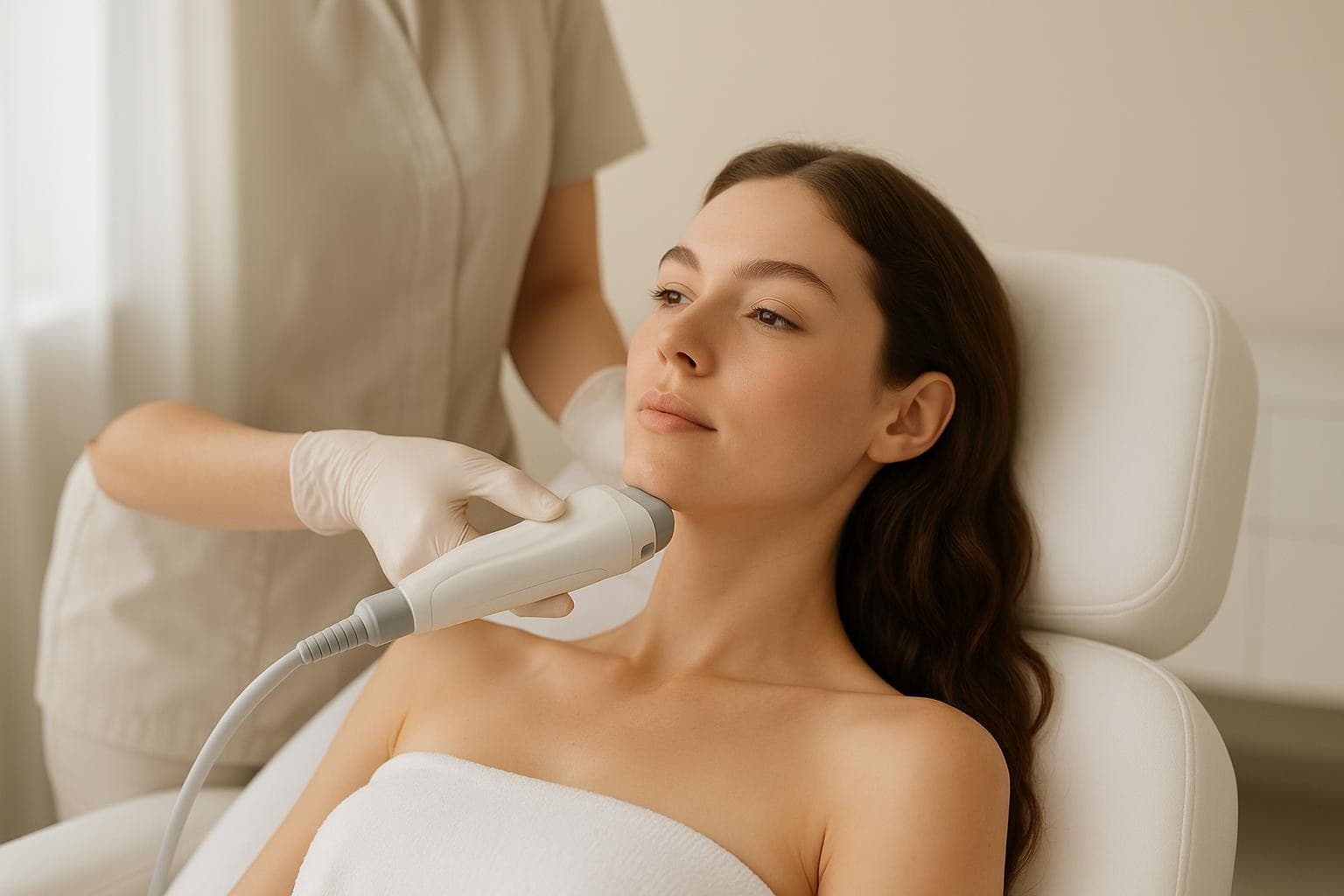
Ultherapy in Korea: How I Lift Sagging Skin Without Surgery — A Gangnam Doctor's Honest Guide
"Is Ultherapy actually worth it?" I get asked this every week. Here's my honest answer, from a Gangnam clinic.
Lifting
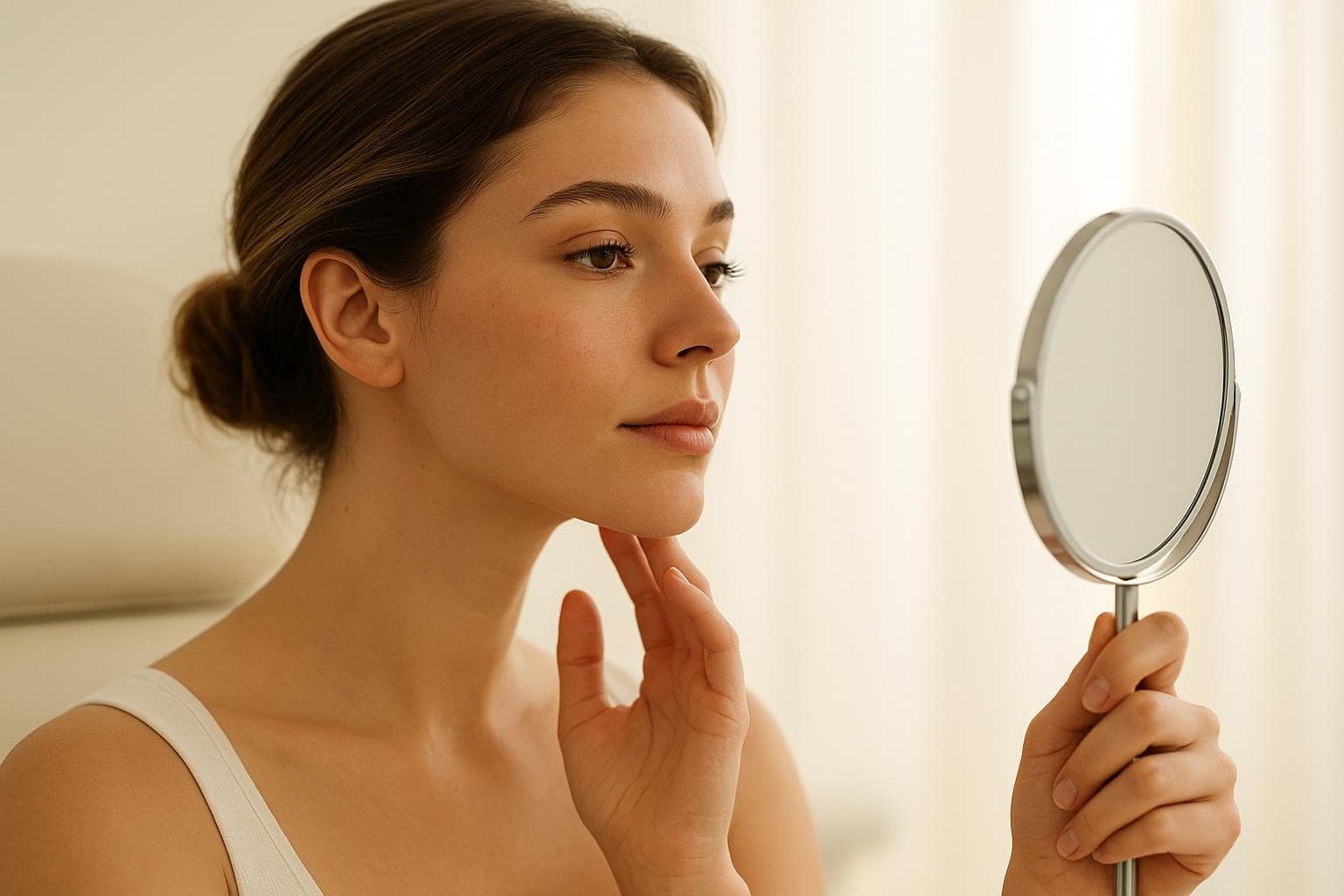
Ultherapy Korea Price: What You Really Pay for a Non-Surgical Lift — A Gangnam Doctor's Honest Value Guide
"How much should Ultherapy really cost in Korea?" I get asked weekly — here's the honest breakdown, from a Gangnam clinic.
Lifting
Ultherapy Price Korea: What You Really Pay for a Non-Surgical Lift — A Gangnam Doctor's Honest Value Guide
"How much does Ultherapy really cost in Korea — and am I being overcharged as a foreigner?" Here's my honest, number-by-number answer.