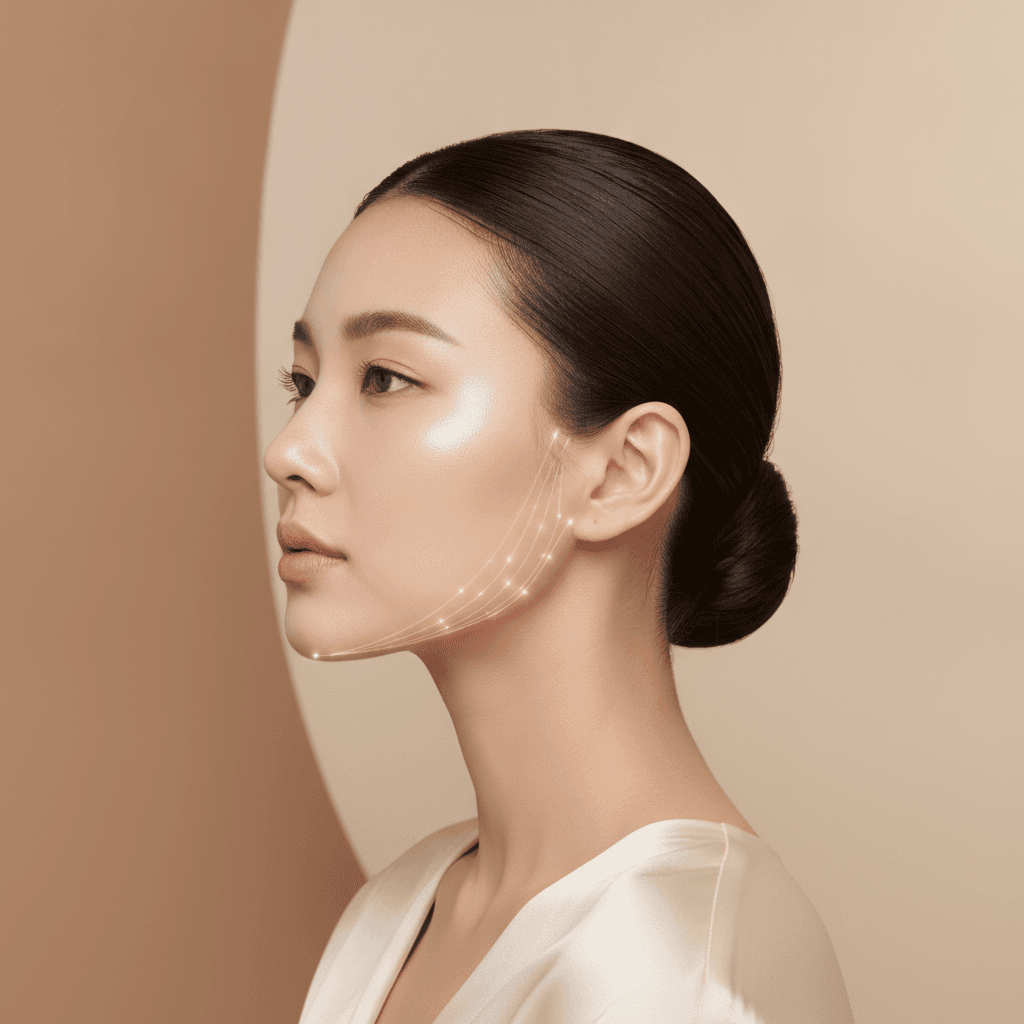
Thread Lift in Korea: How I Lift a Sagging Jawline Without Surgery — A Gangnam Doctor's Honest Guide
Dr. Hyunji Kim
2026-07-118 min read
Medically reviewed by Dr. Hyunji Kim · Last reviewed

A thread lift is one of the most requested non-surgical lifting treatments I do, and also the one most misunderstood — patients arrive expecting either a miracle facelift or nothing at all. The truth of a Korean thread lift sits in between: dissolvable threads are placed under the skin to physically lift a softening jawline or cheek, while also kick-starting your own collagen. It's real, it works, and it has clear limits I want you to understand before you book.
I'm Dr. Hyunji Kim, director at Delphic Clinic in Gangnam. I've placed thousands of threads — mono, cog, nose and jawline — and I've also talked plenty of patients out of them when they weren't the right choice. Here's what a thread lift really does, who it suits, honest before and after expectations, and exactly what it costs in Korea.
What a thread lift actually is — in plain language
A thread lift is a procedure where fine, absorbable threads — most commonly PDO (polydioxanone), the same material used in surgical sutures for decades — are inserted under the skin through a tiny needle or cannula. There are two broad jobs threads do. Cog threads have tiny barbs or 'cogs' that grip the tissue and physically pull it upward, giving you the lift; think jawline, jowls and cheeks. Mono threads are smooth and don't lift much on their own — instead they stimulate collagen to firm and thicken the skin over time. Many good thread lifting plans combine both.
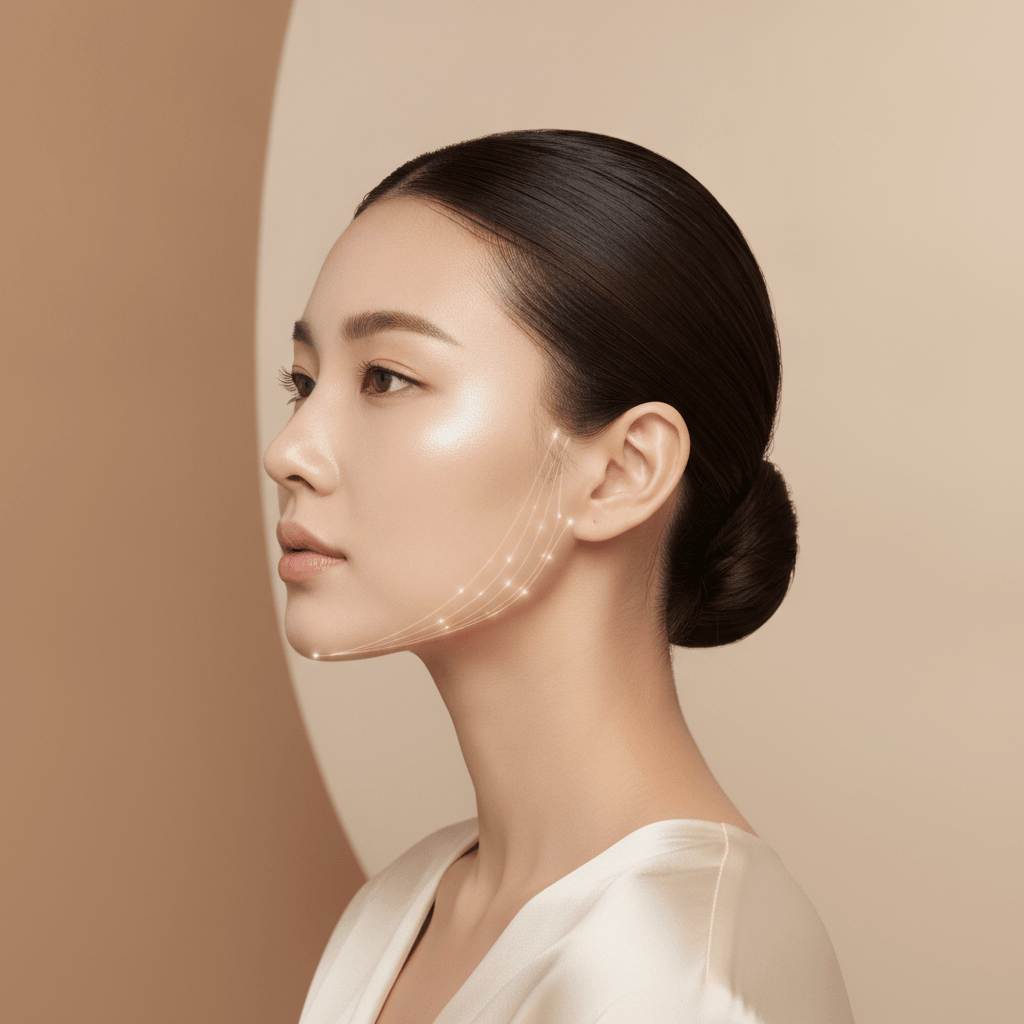
Here's the honest part: a thread lift is not a facelift. It repositions tissue rather than removing it, so if your skin is significantly loose and heavy, threads will underwhelm you. We don't perform surgery at Delphic, and I will never pretend threads do what a surgical facelift does. A thread lift is best thought of as a lift for early-to-moderate sagging — not a cure for advanced laxity.
Who a thread lift is really for
In my chair, the patients who love their thread lift results usually share a few things:
- You're roughly in your 30s to 50s with early or moderate sagging — a softening jawline, mild jowls or flattening cheeks.
- You want a visible jawline definition or cheek lift but can't take weeks off for surgery.
- Your skin still has reasonable elasticity, so threads have something to hold.
- You want a thread lift for the jawline or neck to sharpen the lower face contour.
- You'd like to combine lift with collagen stimulation for gradual, natural firming — not a dramatic overnight change.
And who I steer elsewhere: if you have very heavy, hanging skin, a thread lift will disappoint you and I'll say so honestly — that's a surgical conversation. If you mainly want skin tightening with zero needles, HIFU or a skin booster may suit you better. If you're prone to keloid scarring, on blood thinners, pregnant, or have an active facial infection, we postpone or avoid it. Saying no to the wrong patient is part of doing this well.
How a thread lift compares — an honest comparison
Patients constantly ask how thread lifting stacks up against HIFU, filler and surgery. There's no single winner — it depends entirely on your face and your goals. Here's how I frame it:
In short: a thread lift lifts more than HIFU and adds structure filler can't, but it isn't surgery. Often the most natural result comes from combining threads with a little filler or a skin booster.
Before and after: what's realistic
Two things happen with a thread lift. First, an immediate lift on the day — you'll see a sharper jawline and lifted cheek as soon as the threads are anchored. Some of that initial 'over-lift' settles over the first two weeks as swelling goes down, which is normal and expected. Second, the gradual part: over the following weeks to months the PDO stimulates collagen, so skin firms and the result matures. Realistic PDO thread lift before and after means a refreshed, tighter, more defined face — not a different face. Results are individual and depend on your starting point and how many lines are placed.
Get a free 1:1 consultation
Message our English-speaking team — same price as locals, no pressure.
What to expect — step by step
- 1
1. Free consultation
I assess your skin elasticity, degree of sagging and goals, then tell you honestly whether threads suit you — and how many lines you'd realistically need.
- 2
2. Numbing & prep
We cleanse, mark your lift vectors and apply topical numbing plus local anesthetic so the procedure stays comfortable.
- 3
3. The session
Threads are inserted through a fine needle or cannula along the planned vectors and gently anchored to lift. A full jawline session usually takes 30–45 minutes.
- 4
4. Back to your day
You can leave and return to light activities the same day. Expect mild swelling or tightness; avoid heavy exercise, saunas and wide mouth-opening for about two weeks.
- 5
5. Results build over weeks
The immediate lift settles, then collagen stimulation firms the skin further over the following 1–3 months.
How we do a thread lift at Delphic — and why it matters
Every thread lift here is planned and performed by a doctor — not delegated. Thread work is all about vectors: where you enter, which direction you pull, how deep you place the thread. Get that wrong and you get dimpling, asymmetry or a result that fades in weeks. I map each face individually, use only genuine, sealed PDO threads, and place the minimum number of lines needed for a natural result — I'd rather add later than overdo it. If I think threads won't give you what you want, I'll tell you before you spend a won.
How much does a thread lift cost in Korea?
Korean thread lift cost depends mostly on how many lines you need and whether you combine threads with filler or a skin booster. To make it simple and honest, here are our genuine packages and prices:
| Mint Thread 4 lines + Juvederm 1cc (Allergan) (Nasolabial or Marionette Line, choose 1) | ₩700,000$510 |
| Mint Thread 8 lines + Juvederm 1cc (Allergan) (Nasolabial or Marionette Line, choose 1) | ₩1,100,000$800 |
| Hiko Nose Bridge Thread 2 lines | ₩200,000$140 |
| Barbico Nose Tip Thread 2 lines | ₩200,000$140 |
| Jamber Thread 1 line | ₩120,000$90 |
| Mint Thread 1 line | ₩100,000$70 |
| Mono Thread 50 lines | ₩800,000$580 |
| High-Co 2 Lines | ₩200,000$140 |
| Bavicore 2 strands | ₩200,000$140 |
| 4 Mint Threads + 1cc Rejeuviel | ₩560,000$410 |
| 8 Mint Threads + 1cc Rejeuviel | ₩960,000$700 |
Coming from overseas? Here's how we make it easy
A thread lift is very one-day-friendly, which makes it ideal for a Seoul trip. We have on-site English and Chinese interpreters, so nothing gets lost between you and me during consultation or treatment. We're a direct walk from Sinnonhyeon Station Exit 3 in Gangnam. You can consult, treat and be back exploring the city the same day — and again, you pay exactly the same price as a local patient.
Start with a free 1:1 consultation
Verified Google reviews
4.7 · 260 Google reviewsI received ONDA lifting and Juvelook Skin treatment at Delpic Clinic. Before the procedure, Dr. K carefully examined my skin condition and explained everything in a kind and easy-to-understand way, which made me feel very comfortable and reassured. During the treatment, I could really tell that Dr. K was highly skilled, so I felt confident and at ease throughout the entire process. Overall, I was very satisfied with my experience. It’s definitely a clinic I would love to visit again.
Before any thread lift, book a free 1:1 consultation. There's no pressure and no obligation — I'll look at your skin, tell you honestly whether threads suit you or whether another treatment (or none) makes more sense, and give you a clear plan and price. Honest advice first, treatment second.

Get a free 1:1 consultation
Message our English-speaking team — same price as locals, no pressure.
A thread lift can be a beautifully natural way to lift a softening jawline and refresh your lower face — as long as it's the right tool for you and it's placed by careful, experienced hands. If that's the honest answer for your face, I'd be glad to help. If it isn't, I'll tell you that too. — Dr. Hyunji Kim, Delphic Clinic, Gangnam, Seoul.
Frequently asked questions
Does a thread lift hurt?
Most patients find it very manageable. We numb the area thoroughly with topical cream and local anesthetic before we start, so during the procedure you mostly feel pressure and tugging rather than sharp pain. Afterward there can be mild soreness or tightness for a few days — think of it like a workout ache in the face. Cog thread lifts (the anchoring type) feel a little more than mono thread sessions, but nothing that requires strong painkillers for most people.
How long does a thread lift last?
It typically lasts around 12 to 18 months, depending on the thread type, how many lines are placed, your age and how quickly your body breaks down the material. PDO threads dissolve over roughly 6–8 months, but the collagen they stimulate keeps supporting your skin well after the threads themselves are gone. Mono threads for skin quality give a shorter, subtler effect; cog threads for lifting last longer.
How does a thread lift compare to a facelift or HIFU?
Roughly: a facelift is surgical, most dramatic and longest-lasting but needs weeks of downtime — and we don't perform surgery here. HIFU/Ultherapy tightens with energy and no needles but lifts less on heavier sagging. A thread lift sits in between — it physically repositions tissue with minimal downtime, but it's not a substitute for a surgical facelift on significant sagging.
Is there downtime after a thread lift?
Thread lift downtime is short but real. Expect some swelling, mild bruising and a slightly 'pulled' or dimpled feeling for a few days to two weeks. Most people go back to normal life the next day but I ask patients to avoid heavy exercise, saunas, dental work and wide mouth-opening for about two weeks. Bruising, if it happens, is easily covered with makeup.
How many sessions of thread lift do I need?
It depends on your goal. Lifting is usually done in one session and then maintained every 12–18 months. Mono threads for skin firmness are sometimes done in a small series. In consultation I'll tell you honestly whether one session will meet your expectations — or whether threads simply aren't the right tool for how much lift you want.
How much does a thread lift cost in Korea?
See the prices in the article; same price for locals and visitors. Korean thread lift cost at Delphic ranges from ₩100,000 for a single Mint thread up to around ₩1,100,000 for an 8-line package with premium filler. Your final plan depends on how many lines you need.
Written by
Dr. Hyunji Kim
Dr. Hyunji Kim is the director and lead physician at Delphic Clinic in Gangnam, Seoul. She trained at Korea University Medical Center and personally performs consultations and procedures for both local and international patients.
Read next
Lifting
PDO Thread Lift: Smooth vs Cog Threads, Who Each Suits, and the Risks I Explain First
PDO is a thread material, not a single procedure. A Gangnam doctor explains smooth and cog PDO threads, which faces each suits, how longevity is framed honestly, and the risks discussed before treatment.

Lifting
Thread Lift Korea: How I Lift Sagging Skin Without Surgery — A Gangnam Doctor's First-Timer Guide
"Will a thread lift make me look done?" I get this weekly. Here's the honest answer, from a Gangnam clinic.
Lifting
Thread Lift Gone Wrong: The Problems I See, Which Ones Can Be Fixed, and How to Lower Your Risk
When a thread lift has gone wrong, the first question is whether the problem is temporary, correctable, or a sign that needs a doctor today. A Gangnam doctor sorts the common problems and explains how to lower the risk next time.