Korea Thread Lift: How I Lift Faces Without Surgery — A Gangnam Doctor's Honest Guide
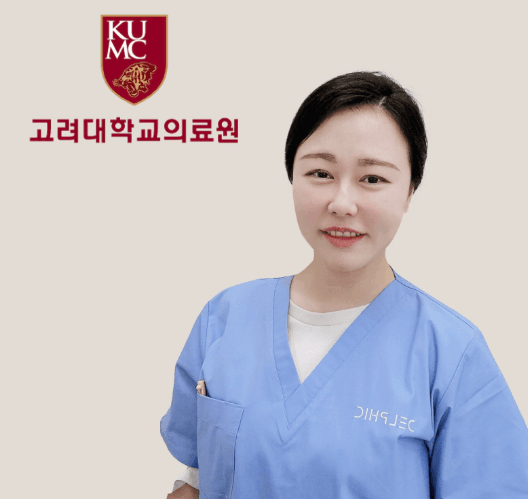
Dr. Hyunji Kim
2026-08-038 min read
Medically reviewed by Dr. Hyunji Kim · Last reviewed

A thread lift in Korea is one of the most requested treatments in my clinic, and for good reason — it gives you a genuine lift without going under the knife. But it's also one of the most over-hyped treatments online, so let me be honest with you about what threads can and can't do.
I'm Dr. Hyunji Kim, director at Delphic Clinic in Gangnam. I place threads almost every day, and my job in this guide is to explain — plainly — what a thread lift actually is, who it genuinely suits, what a session feels like, and who I honestly send elsewhere. No sales pitch, just the version I'd give a friend.
What it actually is — in plain language
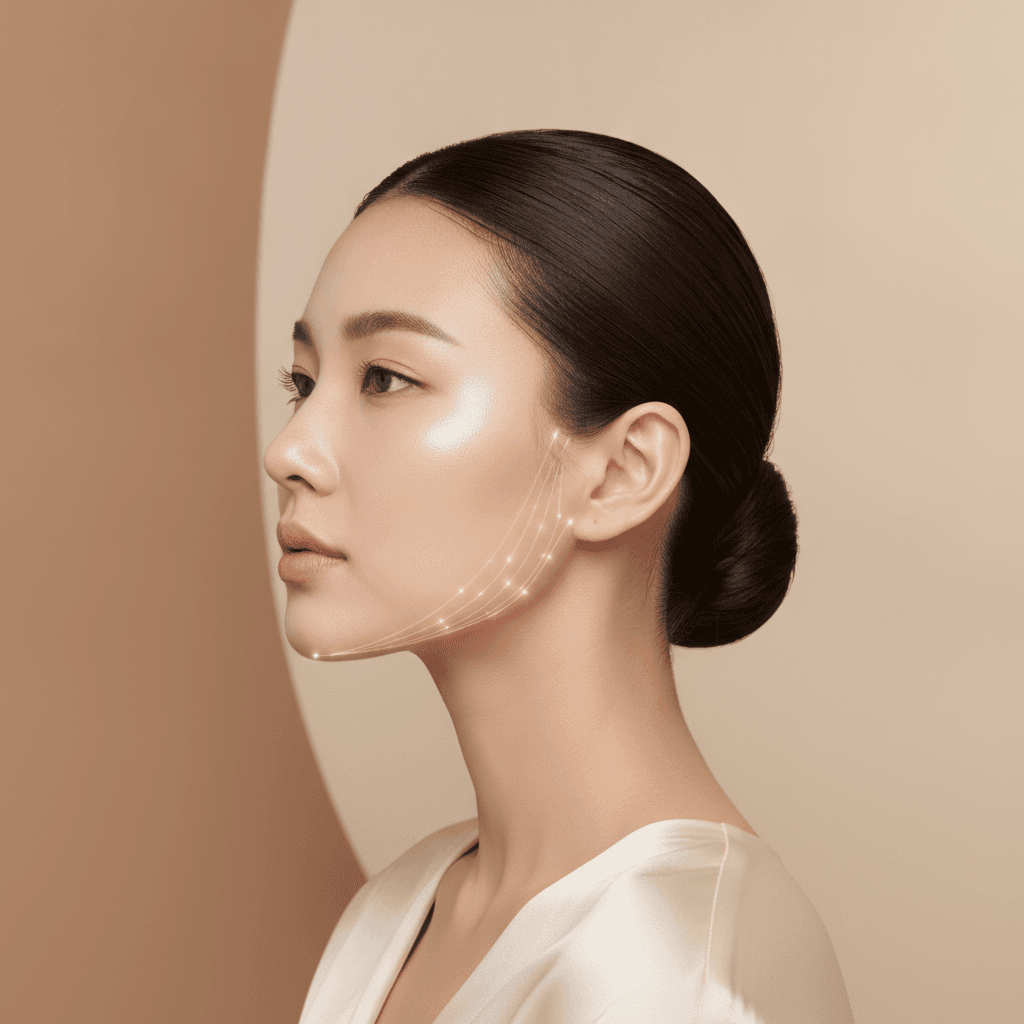
A thread lift uses fine, absorbable threads — usually PDO (polydioxanone), the same material used in dissolvable surgical sutures — inserted under the skin through a tiny entry point. Barbed 'cog' threads (like Mint threads) have small hooks that grab the tissue and pull it upward, physically lifting sagging areas such as the jawline, cheeks, and marionette lines. Smooth mono threads don't lift as much but create a mesh that tightens and improves skin texture over time. The threads dissolve within months, but the controlled collagen they stimulate is what keeps your skin firmer afterward.
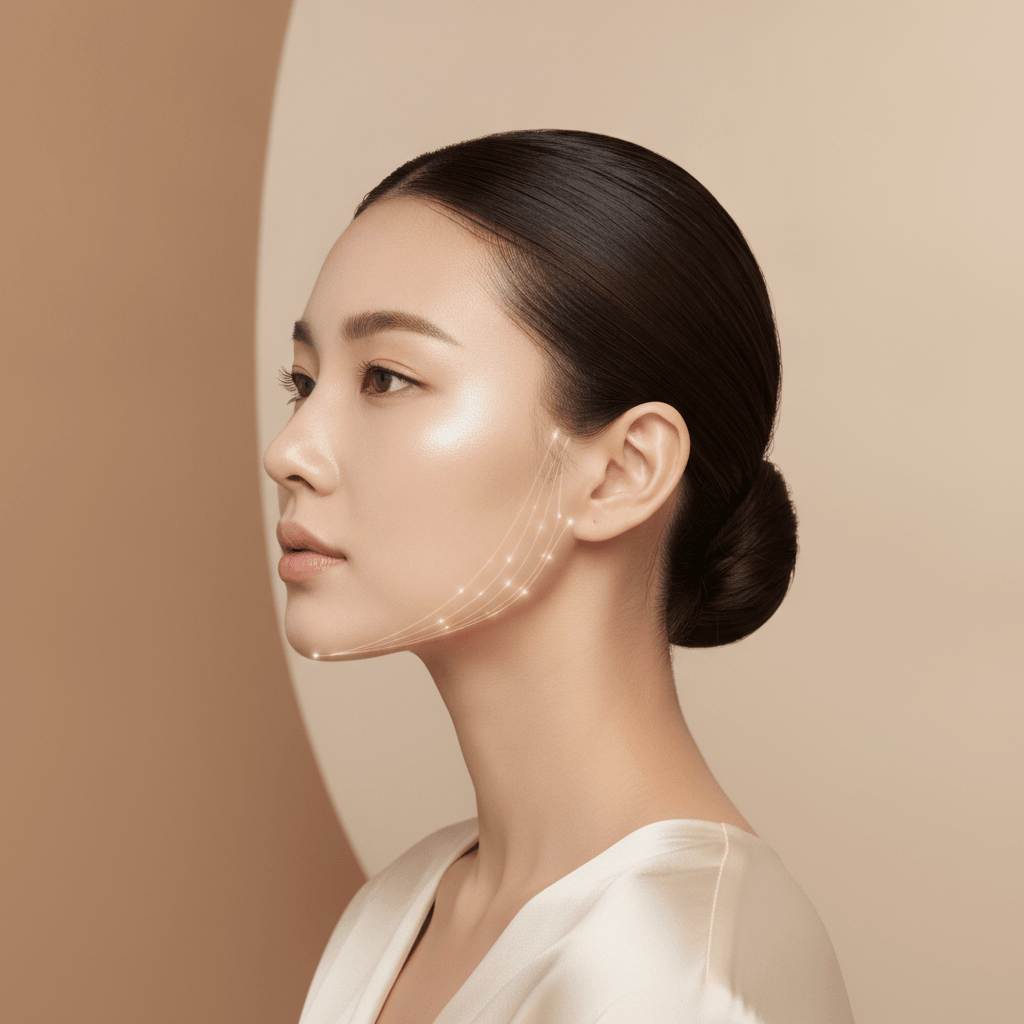
Here's what a thread lift is NOT: it is not a facelift. It won't remove excess skin, and it won't recreate the dramatic, long-lasting result of surgery. If your skin is heavily sagging, threads alone will disappoint you — and any clinic promising 'facelift results without surgery' is overselling. It's a lift, but a subtle, temporary one.
Who it's really for
In my experience, thread lifts work beautifully for the right candidate. You're likely a good fit if you have:
- Early to moderate sagging along the jawline or cheeks, where the skin is starting to droop but isn't heavily loose.
- Deepening nasolabial folds or marionette lines you'd like softened and lifted.
- A desire for a low nose bridge or undefined nose tip to be reshaped — this is where a nose thread lift korea (Hiko) shines.
- A busy schedule and no tolerance for surgical downtime — you want to look refreshed by the weekend.
- Skin that still has decent elasticity, typically from your early 30s to late 50s.
And who I steer elsewhere: if you have significant, advanced sagging, loose 'jowls' with a lot of excess skin, or you want a permanent change, I'll be honest and tell you a thread lift won't be enough — a surgical consult is the right path. I'd rather lose the booking than give you a result you'll regret. Very thin, delicate skin and certain autoimmune or clotting conditions may also make you a poor candidate.
How it compares — an honest comparison
Threads sit in a specific niche between injectables and surgery. Here's how I explain the options to patients side by side:
In practice I often combine tools — a few threads to lift, a little filler to restore volume, sometimes energy devices for skin quality. A face is three-dimensional, and one treatment rarely does everything.
Before and after: what's realistic
Right after your session you'll usually see an immediate lift — that's the mechanical effect of the threads. It looks best after the initial swelling settles, around 1–2 weeks. Then the collagen-building phase kicks in over the following 1–3 months, quietly improving firmness and texture. The result is natural and gradual — friends tend to say you look rested rather than 'done.' It is genuinely subtler than a surgical lift, and how much lift you get depends on your starting point, the number of lines, and your own skin.
Get a free 1:1 consultation
Message our English-speaking team — same price as locals, no pressure.
What to expect — step by step
- 1
1. Free consultation
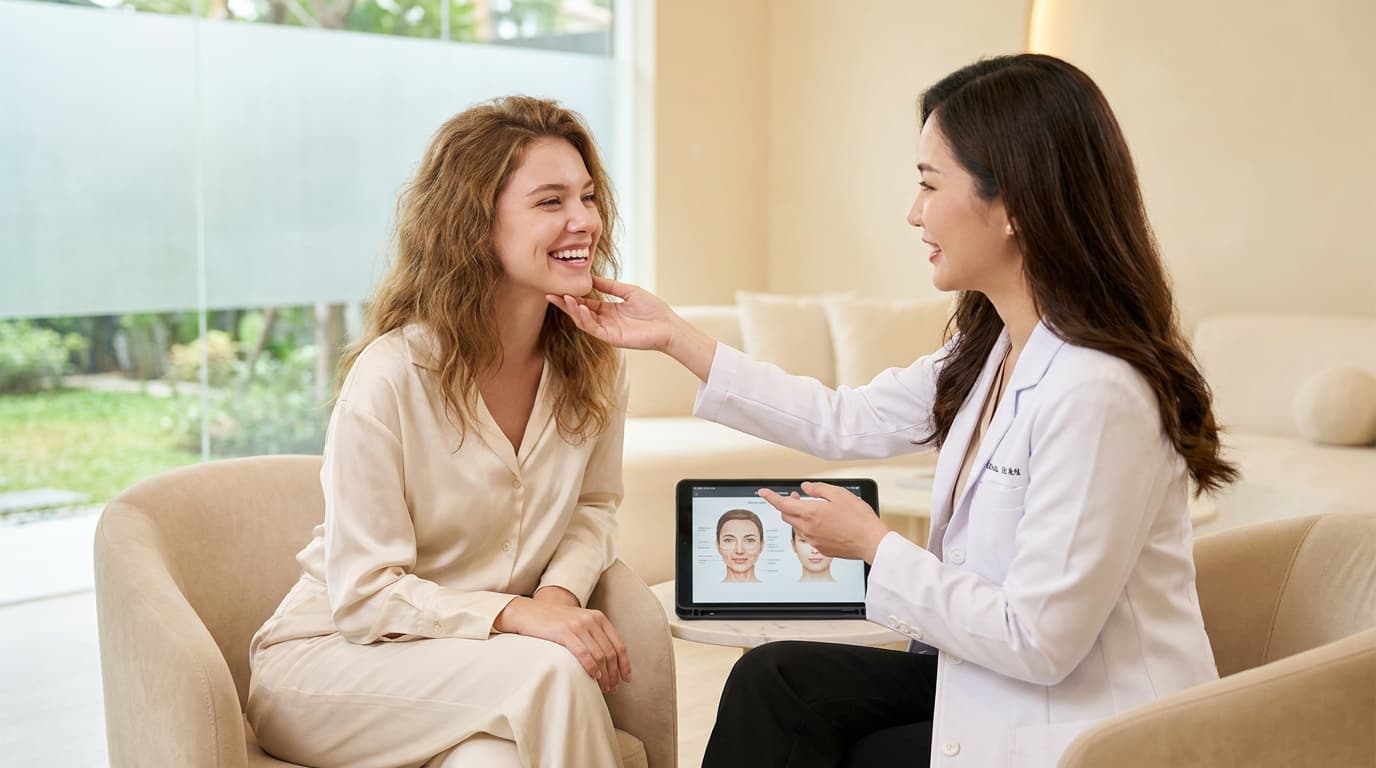
I assess your skin elasticity, the pattern of your sagging, and your goals — then tell you honestly whether threads suit you, and how many lines make sense. If you'd be better with something else, I'll say so.
- 2
2. Numbing & prep
We cleanse the area and apply topical numbing cream, followed by small local anesthetic injections at the entry points, so the procedure itself is comfortable.
- 3
3. The session
I insert the threads through tiny entry points using a fine cannula or needle, positioning and gently drawing the tissue upward. A typical session takes about 30–45 minutes depending on the number of threads.
- 4
4. Back to your day
You can leave and resume most normal activities immediately. Expect mild tenderness, possible minor bruising, and a slight tight feeling. Avoid heavy exercise, saunas, and wide facial movements for about two weeks.
- 5
5. Results build over weeks
You'll see an immediate lift that refines as swelling settles, then continued firming as collagen forms over 1–3 months.
How we do it at Delphic — and why it matters
Every thread lift at Delphic is planned and performed by a doctor — not delegated. Thread placement is technique-dependent: the vector (direction) of the lift, the depth, and the anchoring points decide whether you get a natural result or an uneven, dimpled one. I use genuine, individually packaged threads and choose the type and number based on your anatomy, not a fixed 'package.' For Hiko nose thread lift korea patients, I'm careful about tip projection and symmetry, because the nose is unforgiving of small errors.
How much does it cost in Korea?
Thread lift cost korea varies a lot by clinic, thread type, and number of lines — which is exactly why comparing a single number is misleading. What matters is who's placing them and with what. Here are our genuine, published prices:
| Mint Thread 4 lines + Juvederm 1cc (Allergan) (Nasolabial or Marionette Line, choose 1) | ₩700,000$510 |
| Mint Thread 8 lines + Juvederm 1cc (Allergan) (Nasolabial or Marionette Line, choose 1) | ₩1,100,000$800 |
| Hiko Nose Bridge Thread 2 lines | ₩200,000$140 |
| Barbico Nose Tip Thread 2 lines | ₩200,000$140 |
| Jamber Thread 1 line | ₩120,000$90 |
| Mint Thread 1 line | ₩100,000$70 |
| Mono Thread 50 lines | ₩800,000$580 |
| High-Co 2 Lines | ₩200,000$140 |
| Bavicore 2 strands | ₩200,000$140 |
| 4 Mint Threads + 1cc Rejeuviel | ₩560,000$410 |
| 8 Mint Threads + 1cc Rejeuviel | ₩960,000$700 |
Coming from overseas? Here's how we make it easy
We host a lot of international patients, and a thread lift is very travel-friendly. We have on-site English and Chinese interpreters, so nothing gets lost in translation during your consultation or aftercare. We're a one-day-friendly clinic — consultation and treatment can often happen in the same visit — and we're a short walk from Sinnonhyeon Station Exit 3. And yes, the price is identical to what a local pays. Just avoid flying the same day if you can, so any minor swelling settles first.
Start with a free 1:1 consultation
When a consultation turns to this topic, I often end up explaining PDO thread lifts for a sagging jawline too.
Patients who ask me this often ask next about the real price of a thread lift in Korea, which I answer separately.
Verified Google reviews
4.7 · 260 Google reviewsI received ONDA lifting and Juvelook Skin treatment at Delpic Clinic. Before the procedure, Dr. K carefully examined my skin condition and explained everything in a kind and easy-to-understand way, which made me feel very comfortable and reassured. During the treatment, I could really tell that Dr. K was highly skilled, so I felt confident and at ease throughout the entire process. Overall, I was very satisfied with my experience. It’s definitely a clinic I would love to visit again.
Before any threads, book a free 1:1 consultation. I'll look at your skin in person, tell you honestly whether a thread lift is right for you, and — if it isn't — point you toward what actually is. No pressure, no upselling. That's how I'd want to be treated myself.

Get a free 1:1 consultation
Message our English-speaking team — same price as locals, no pressure.
A thread lift is a wonderful in-between option when it fits — and an honest 'not for you' when it doesn't. Come in, let's look at your face properly, and decide together. — Dr. Hyunji Kim, Delphic Clinic, Gangnam, Seoul.
Frequently asked questions
Does a thread lift hurt?
Most patients find it very manageable. We numb the area first with topical and local anesthetic, so during placement you feel pressure and tugging more than sharp pain. There can be mild soreness or a pulling sensation for a few days after, especially when you smile or chew — but it usually settles quickly with paracetamol.
How long does a thread lift last?
PDO threads dissolve over roughly 6–8 months, but the collagen they stimulate keeps working after that, so the visible result typically lasts around 12–18 months depending on the thread type, how many lines were placed, and your skin. Nose threads (Hiko) can hold shape a bit longer.
How does a thread lift compare to filler or a facelift?
Filler adds volume; threads reposition and firm sagging tissue. A surgical facelift gives the most dramatic, longest-lasting result but involves incisions and weeks of downtime. A thread lift sits in between — a real lift with almost no downtime, but a subtler, temporary one. Often I combine threads with a little filler for the best natural result.
Is there downtime after a thread lift?
No real social downtime for most people. You may have slight swelling, tenderness, small bruises at entry points, or a mild dimpling that smooths out within days. Many patients come on a lunch break. I do ask you to avoid heavy exercise, saunas, and big facial movements for about two weeks.
How many sessions do I need?
A thread lift is usually a single session — we place the planned number of lines in one visit. Some people top up after 12–18 months to maintain the effect, or add mono threads for skin tightening. It's not a repeated multi-session protocol like some laser treatments.
How much does a thread lift cost in Korea?
See the prices in the article. At Delphic, single Mint threads start at ₩100,000, Hiko nose thread lift is ₩200,000 for 2 lines, and Mint thread + Juvederm packages run ₩700,000–₩1,100,000 — the same price for locals and visitors, no foreigner mark-up.
Written by
Dr. Hyunji Kim
Dr. Hyunji Kim is the director and lead physician at Delphic Clinic in Gangnam, Seoul. She trained at Korea University Medical Center and personally performs consultations and procedures for both local and international patients.
Read next
Lifting
Korea Thread Lift Price: What It Really Costs — A Gangnam Doctor's Honest Breakdown
"Why is the thread lift price so different everywhere?" I get asked this weekly — here's the honest breakdown from a Gangnam clinic.

Lifting
PDO Thread Lift Korea: How I Lift a Sagging Jawline Without Surgery — A Gangnam Doctor's Honest First-Timer Guide
"Can threads really lift my face without surgery?" I answer this every week — here's the honest version, from my Gangnam clinic.

Lifting
Thread Lift Korea Cost: What You'll Really Pay — A Gangnam Doctor's Honest Price Guide
"How much is a thread lift in Korea, really?" I answer this every week — so here's the honest math, from a Gangnam clinic.