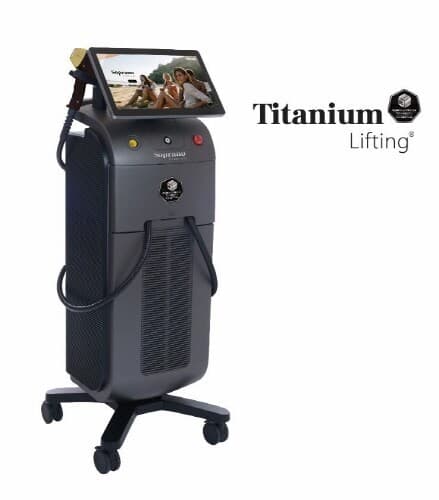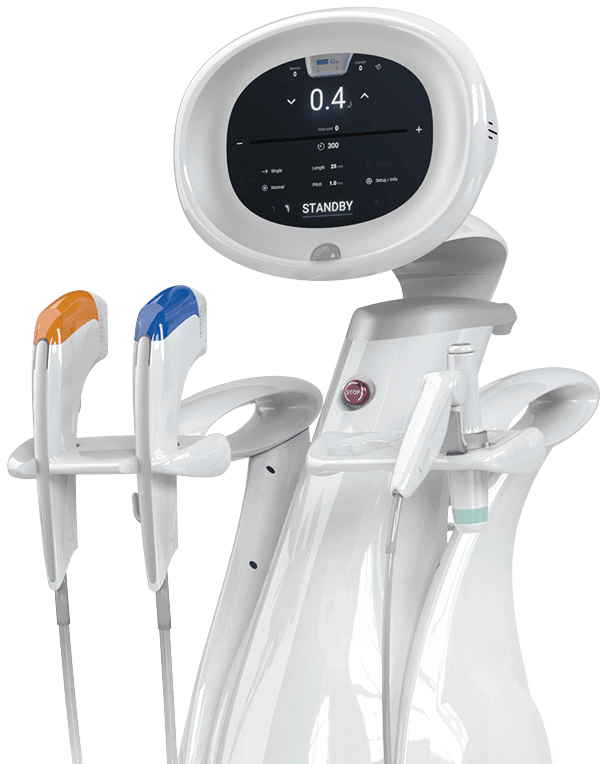
Titanium Lifting in Korea: How I Tighten Skin Without Surgery — A Gangnam Doctor's Honest Guide
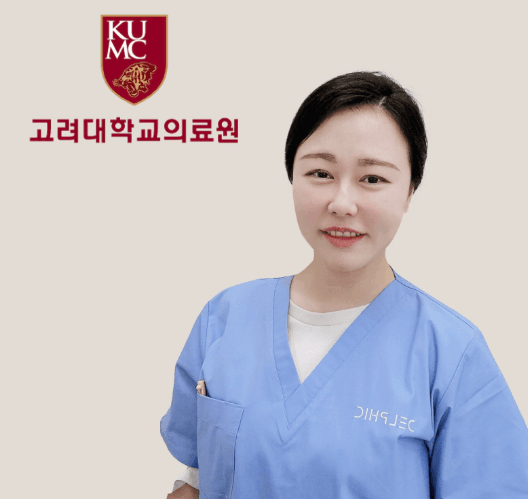
Dr. Hyunji Kim
2026-07-068 min read
Medically reviewed by Dr. Hyunji Kim · Last reviewed
Titanium lifting is one of the treatments I'm asked about most by patients flying into Seoul who want firmer, glowier skin without surgery or serious downtime. It's known internationally as Soprano Titanium — a diode laser lifting technology — and it's become a favorite because it's comfortable, quick, and fits neatly into a one-day trip.
I'm Dr. Hyunji Kim, director at Delphic Clinic in Gangnam. In this guide I'll explain what titanium laser lifting really does, who genuinely benefits, who I steer toward something else, and what titanium lifting before and after actually looks like — honestly, without hype.
What it actually is — in plain language
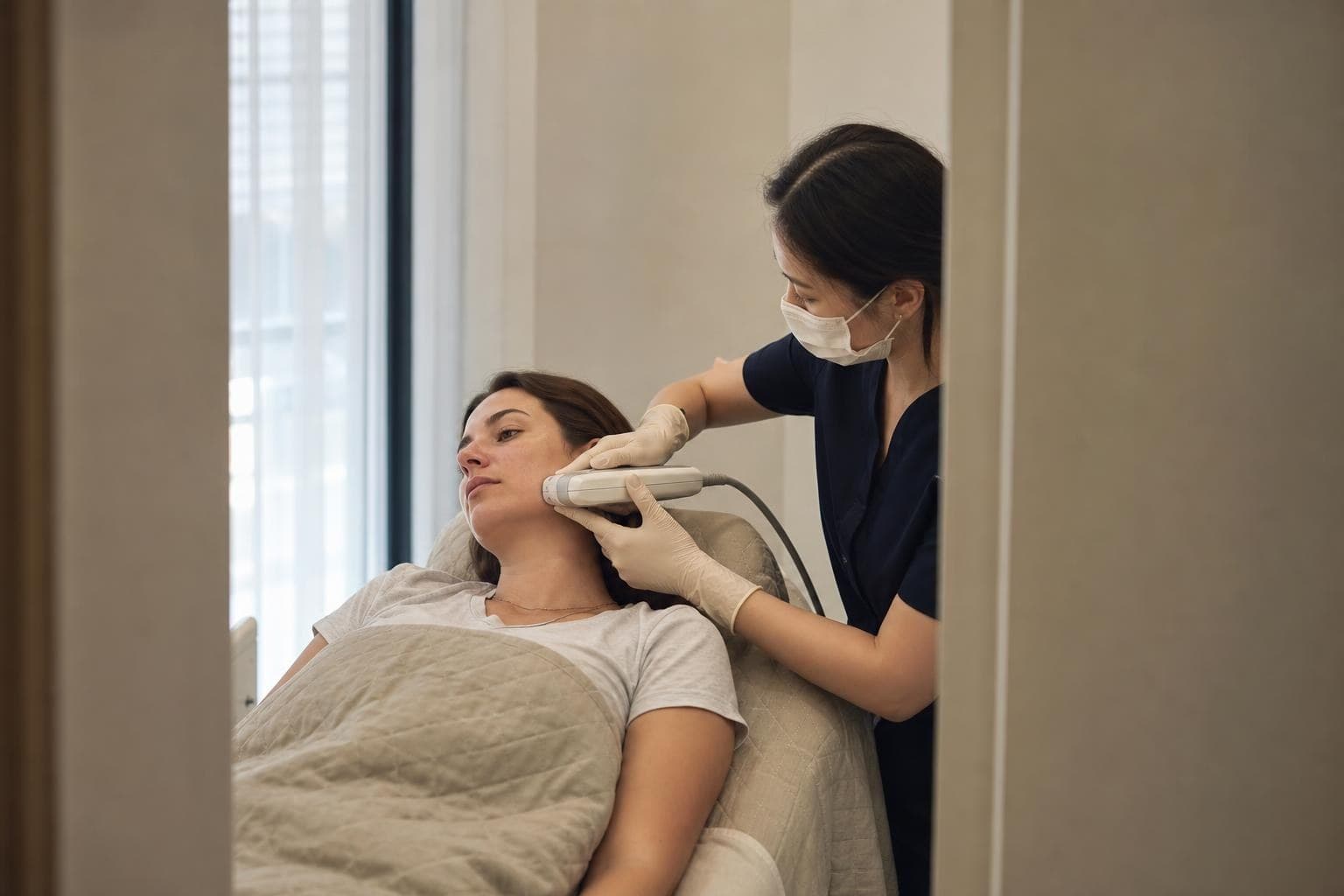
Titanium lifting uses a diode laser that delivers three wavelengths at once (that's the 'titanium' part) to heat the deeper dermal layers of your skin evenly and gently. This controlled heat stimulates your body to produce new collagen and contract existing collagen fibers, which over time tightens the skin and improves firmness and texture. The handpiece glides in a smooth motion with built-in cooling, so it feels like a warm facial massage rather than a laser.
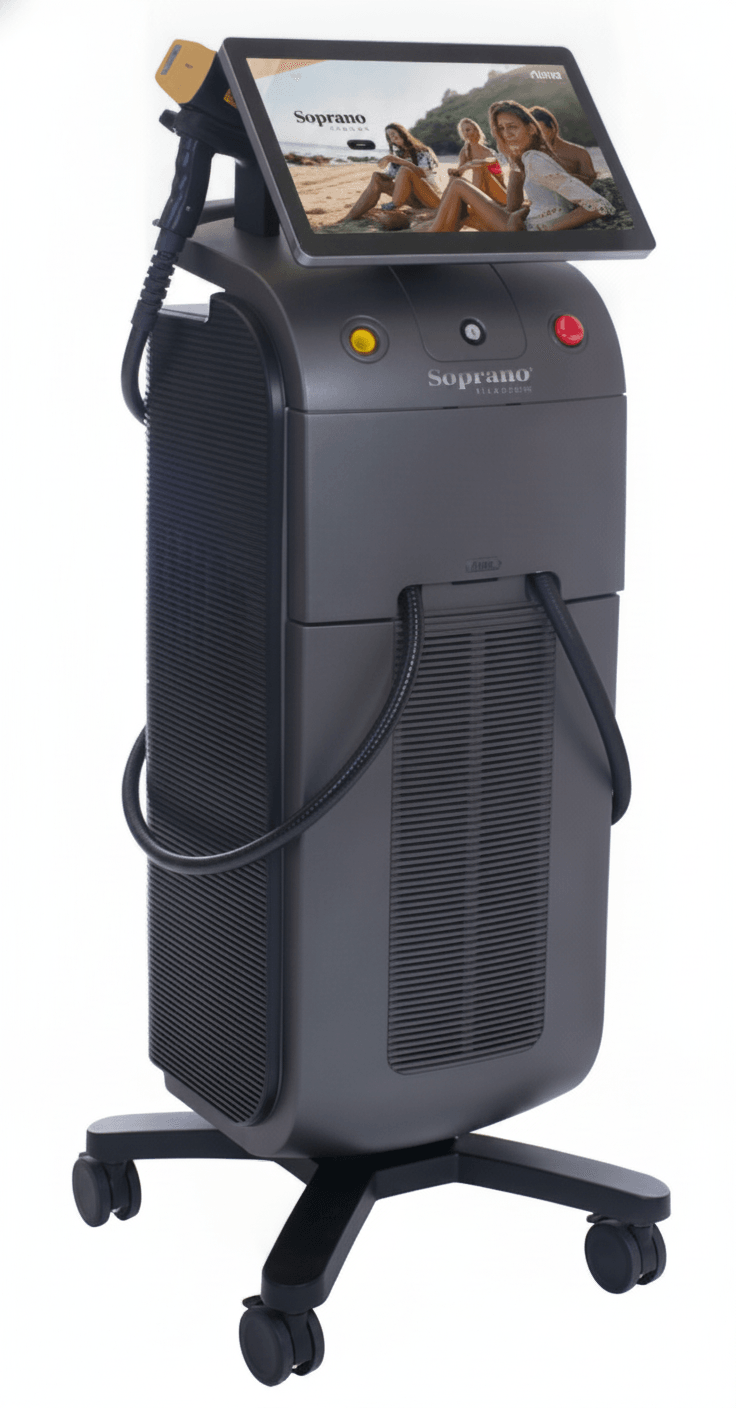
Here's the honest part: titanium lifting is not a facelift, and it's not HIFU. It won't dramatically lift heavy jowls or remove deep excess skin. Think of it as a skin-quality and mild-tightening treatment — great for prevention and refinement, modest for correcting significant sagging. Anyone promising a 'surgical result from a laser' isn't being straight with you.
Who it's really for
Soprano titanium lifting suits a specific type of patient really well. You're a good candidate if you recognize yourself in this list:
- You're in your late 20s to 40s and noticing early skin laxity or loss of 'bounce'.
- You want firmer, tighter, glowier skin but can't accept any downtime.
- You dislike the sharp sensation of some ultrasound lifting devices and want something comfortable.
- You want to improve overall skin tone and texture, not just lift one area.
- You're visiting Seoul briefly and need a same-day, makeup-friendly treatment.
And who I steer elsewhere: if you have significant sagging, heavy jowls, or a lot of loose skin, a single laser won't meet your expectations — I'll usually recommend HIFU (Shurink), thread lifting, or a combination, and I'll tell you so honestly at the consultation rather than sell you a course that won't deliver.
How it compares — an honest comparison
Patients often ask how titanium laser lifting stacks up against the other non-surgical options. Here's my plain-English guide:
In short: titanium lifting is the gentle, no-downtime option for early aging and skin quality; the others step up in intensity and lift. They combine beautifully — many of my patients pair titanium with HIFU for the best of both.
Before and after: what's realistic
Realistically, titanium lifting works gradually. After a single session you may notice a fresher, tighter look and a nice glow, but the real collagen-building happens over the following 4–8 weeks. Over a course of sessions you can expect subtly firmer, smoother, more even-toned skin. It's refinement, not transformation — and results genuinely vary from person to person depending on age, skin condition and how many sessions you do.
Get a free 1:1 consultation
Message our English-speaking team — same price as locals, no pressure.
What to expect — step by step
- 1
1. Free consultation
We assess your skin, your laxity and your goals, and decide honestly whether titanium lifting fits — or whether something else suits you better.
- 2
2. Cleanse & prep
We cleanse the skin and apply a thin coupling gel. No numbing cream is usually needed because the treatment is comfortable.
- 3
3. The session
The handpiece glides over your face in smooth passes, delivering warm laser energy with cooling. Most sessions take about 20–30 minutes and feel relaxing.
- 4
4. Back to your day
No downtime. Any mild warmth or redness settles within an hour or two. You can wear makeup and go straight back to sightseeing or work.
- 5
5. Results build over weeks
Collagen renews over the following 4–8 weeks. For lasting results, we often plan a short course spaced a few weeks apart.
How we do it at Delphic — and why it matters
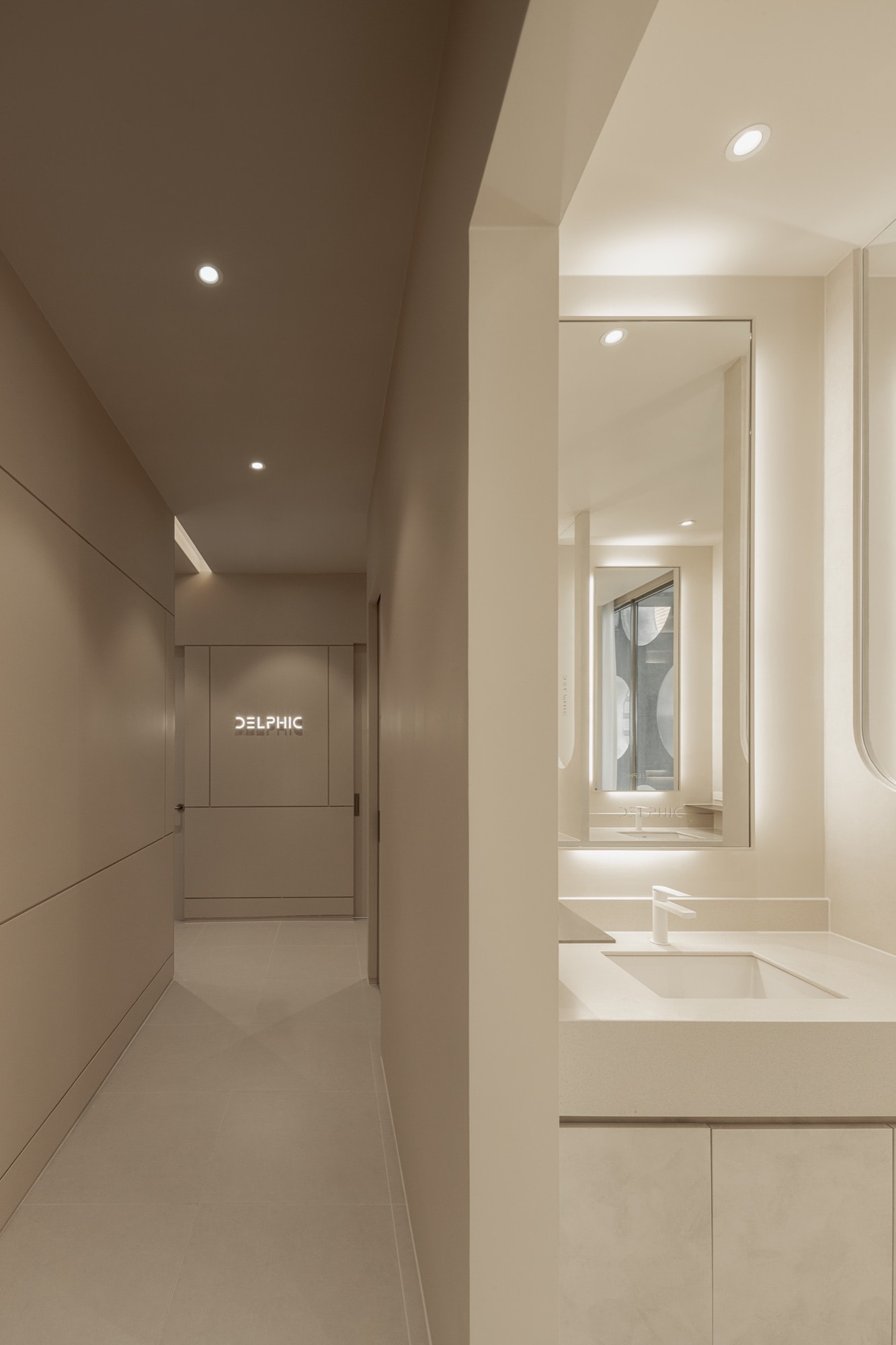
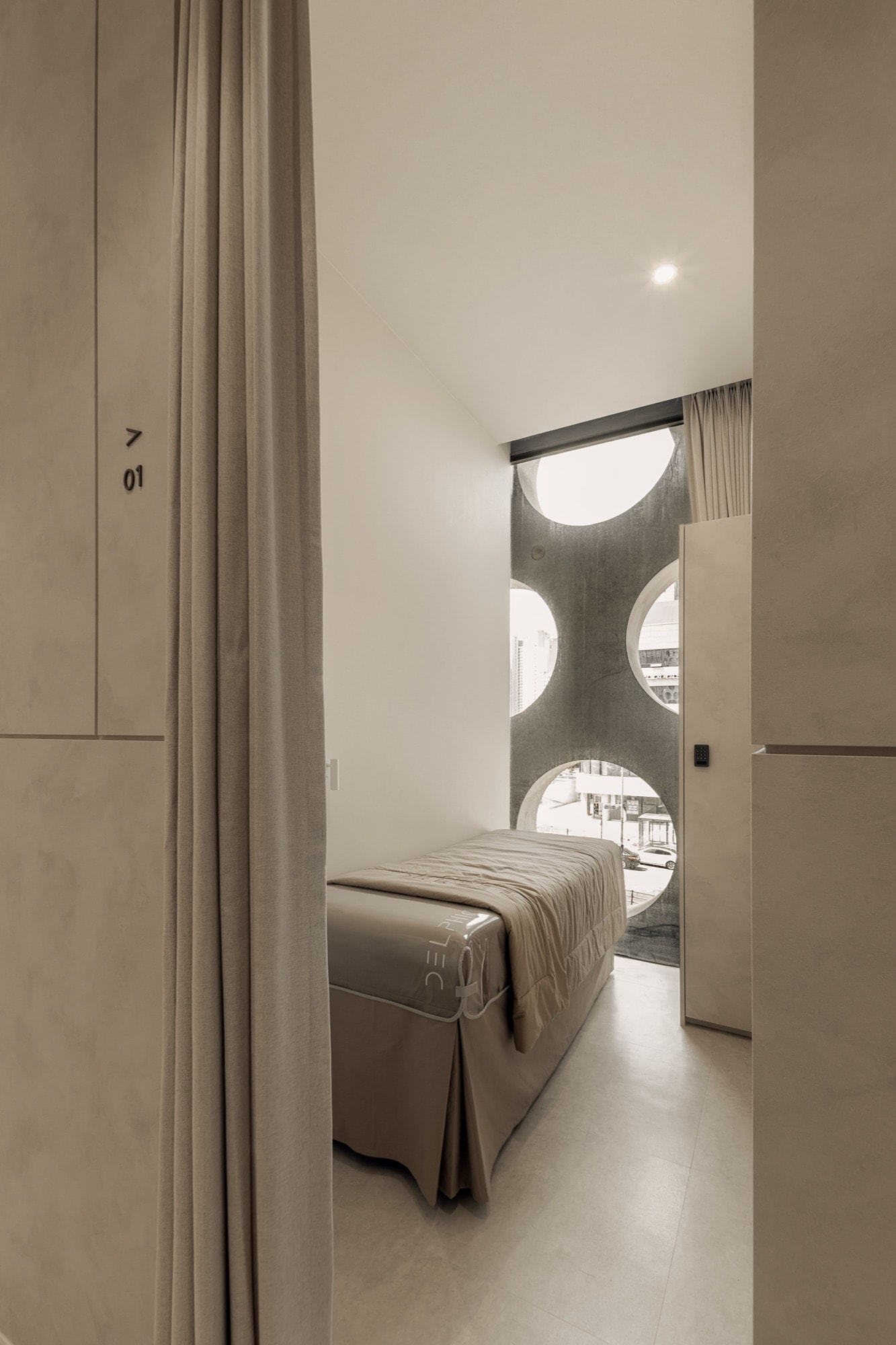
At Delphic, titanium lifting is doctor-led. I personally assess whether it's right for you and set the energy parameters based on your skin — not a one-size-fits-all setting. We use a genuine Soprano Titanium device (device authenticity matters enormously with lasers), and we tailor the energy dose, which is why we offer 40KJ and 60KJ options. That care is the difference between a comfortable, effective session and a wasted one.
How much does it cost in Korea?
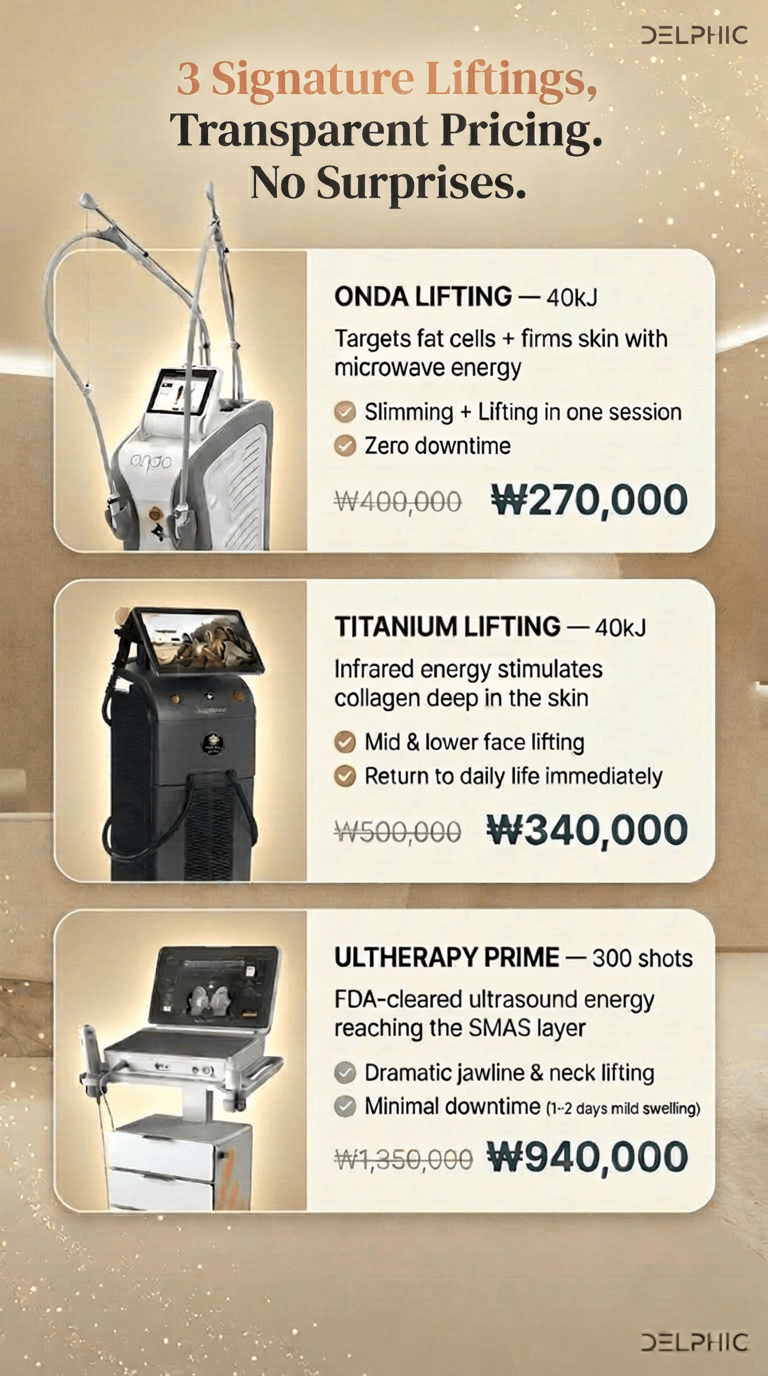
Titanium lifting cost depends on the energy level and number of sessions in your plan. Higher energy (60KJ) covers more area or deeper treatment. Here are our genuine, transparent prices:
| Titanium 40KJ | ₩500,000$360 |
| Titanium 60KJ | ₩700,000$510 |
| Titanium 40KJ (First-visit trial) | ₩340,000$250 |
Coming from overseas? Here's how we make it easy
We treat a lot of international patients. We have on-site English and Chinese interpreters, so nothing gets lost in translation during your consultation. Titanium lifting is one-day-friendly with no downtime, so it fits perfectly into a short Seoul trip. We're a direct walk from Sinnonhyeon Station Exit 3, and — worth repeating — you pay the same price as a local, always.
Start with a free 1:1 consultation
Verified Google reviews
4.7 · 260 Google reviewsI received ONDA lifting and Juvelook Skin treatment at Delpic Clinic. Before the procedure, Dr. K carefully examined my skin condition and explained everything in a kind and easy-to-understand way, which made me feel very comfortable and reassured. During the treatment, I could really tell that Dr. K was highly skilled, so I felt confident and at ease throughout the entire process. Overall, I was very satisfied with my experience. It’s definitely a clinic I would love to visit again.
I had a really great experience at Delphic Clinic. The staff were very friendly and made me feel comfortable from the moment I walked in. They explained everything clearly in English and didn’t try to oversell unnecessary treatments, which I really appreciated. The clinic is very clean and modern, and the whole process felt professional and well-organized. Overall, I would definitely recommend this clinic, especially if you’re a foreigner looking for a trustworthy place in Korea.
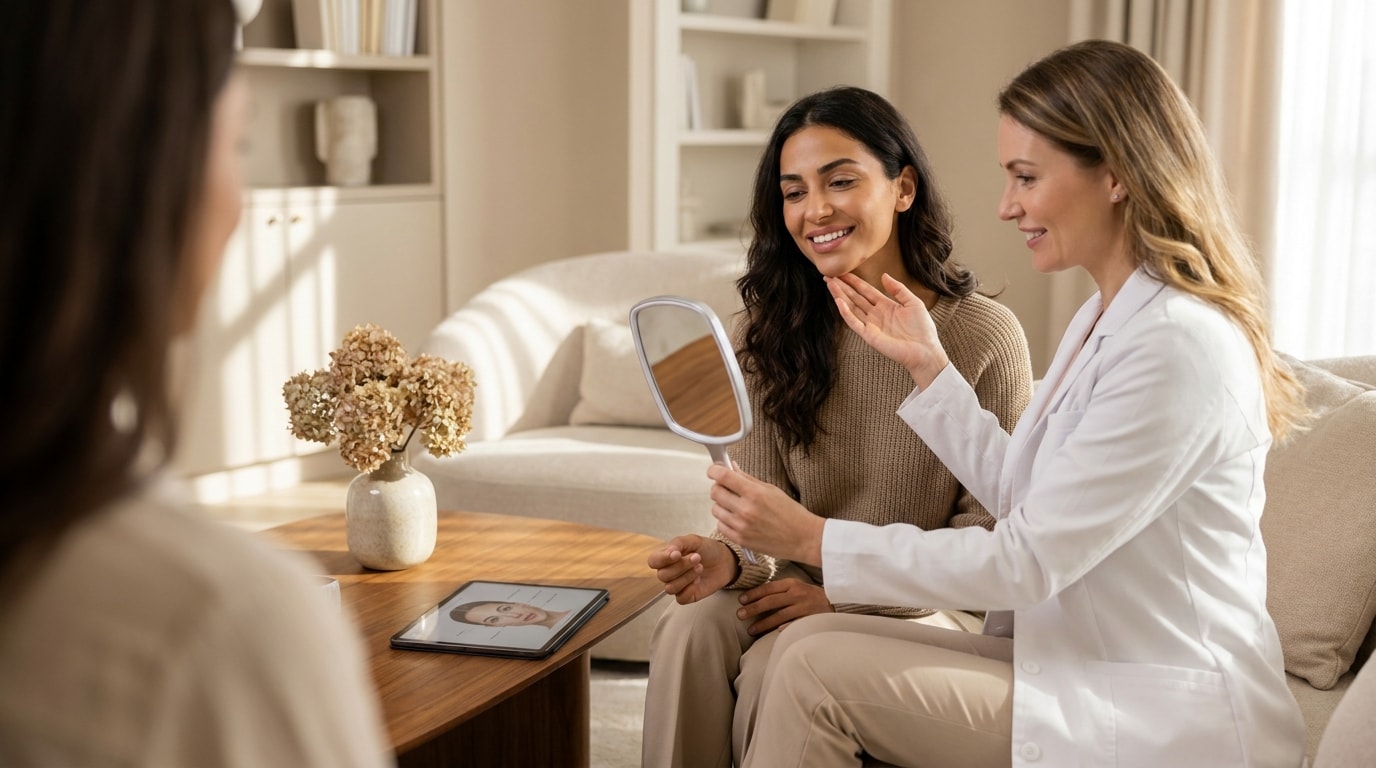
Every good result starts with an honest conversation. Your 1:1 consultation is free and there's no pressure — if titanium lifting isn't right for you, I'll tell you and suggest what is. Come with your questions; I'd rather you leave informed than oversold.

Get a free 1:1 consultation
Message our English-speaking team — same price as locals, no pressure.
Skin that looks a little firmer and fresher — without surgery or downtime — is a realistic, lovely goal, and titanium lifting can help you get there when it genuinely fits. Come see us, and let's make an honest plan together. — Dr. Hyunji Kim, Delphic Clinic, Gangnam, Seoul.
Frequently asked questions
Does titanium lifting hurt?
Most patients find it very comfortable — it feels like a warm massage gliding over the skin. Because Soprano Titanium uses a bulk-heating diode laser with contact cooling, there's no sharp zapping like some ultrasound lifting devices. No numbing cream is usually needed.
How long do the results last?
Skin-tightening effects from a single session typically build over 4–8 weeks and last around 3–6 months. Because collagen naturally declines with age, most patients maintain results with a session every few months rather than expecting a one-time permanent fix.
How does titanium lifting compare to HIFU or thread lifting?
Roughly: titanium (diode laser) is gentle, no-downtime, gradual and great for overall skin quality and mild tightening. HIFU (like Shurink) targets deeper layers for firmer lifting. Threads give the most immediate mechanical lift but involve insertion and recovery. They're complementary, not competitors.
Is there any downtime?
No real downtime. Mild warmth or slight redness can appear for an hour or two, but you can apply makeup and return to work, sightseeing or dinner the same day.
How many sessions will I need?
It depends on your skin and goals. Many patients notice a glow and mild firming after one session, but a course of 3–5 sessions spaced 2–4 weeks apart gives more visible, lasting results. We decide your plan in person.
How much does titanium lifting cost in Korea?
At Delphic, Titanium 40KJ is ₩500,000 and Titanium 60KJ is ₩700,000. See the prices in the article — and you pay the same price as a local Korean patient, with no foreigner mark-up.
Written by
Dr. Hyunji Kim
Dr. Hyunji Kim is the director and lead physician at Delphic Clinic in Gangnam, Seoul. She trained at Korea University Medical Center and personally performs consultations and procedures for both local and international patients.
Read next

Lifting
Titanium Lifting in Korea: How I Tighten Skin Without Surgery — A Gangnam Doctor's Honest Guide
"Is titanium lifting actually worth it?" I get asked this weekly. Here's my honest answer, from a Gangnam clinic.

Lifting
Titanium Lifting Korea: How I Firm & Brighten Skin Without Surgery — A Gangnam Doctor's Honest First-Timer Guide
"Is Titanium Lifting worth it?" I get asked this weekly. Here's the honest answer, from a Gangnam clinic.
Lifting
Titanium Lifting Cost in Korea: What Actually Sets the Price
Two quotes can differ threefold and both be honest. The number you are comparing is usually shots, not the clinic.