Ultherapy Cost Korea: What You Really Pay for Lifting — A Gangnam Doctor's Honest Guide
Dr. Hyunji Kim
2026-08-018 min read
Medically reviewed by Dr. Hyunji Kim · Last reviewed
Ultherapy cost in Korea is one of the first questions international patients email me about — and it deserves an honest answer, not a vague "it depends." People have read that ultherapy price in Korea is far lower than back home, which is often true, but the number on a menu means very little until you know how many shots it includes and whether that plan actually suits your face. So let me walk you through the real economics of it.
I'm Dr. Hyunji Kim, director at Delphic Clinic in Gangnam, a short walk from Sinnonhyeon Station Exit 3. I've treated locals and travelers from dozens of countries, and I'd rather you leave understanding what you're paying for than be dazzled by a low headline price. Here's what Ultherapy really does, who it fits, and what it should cost.
What it actually is — in plain language
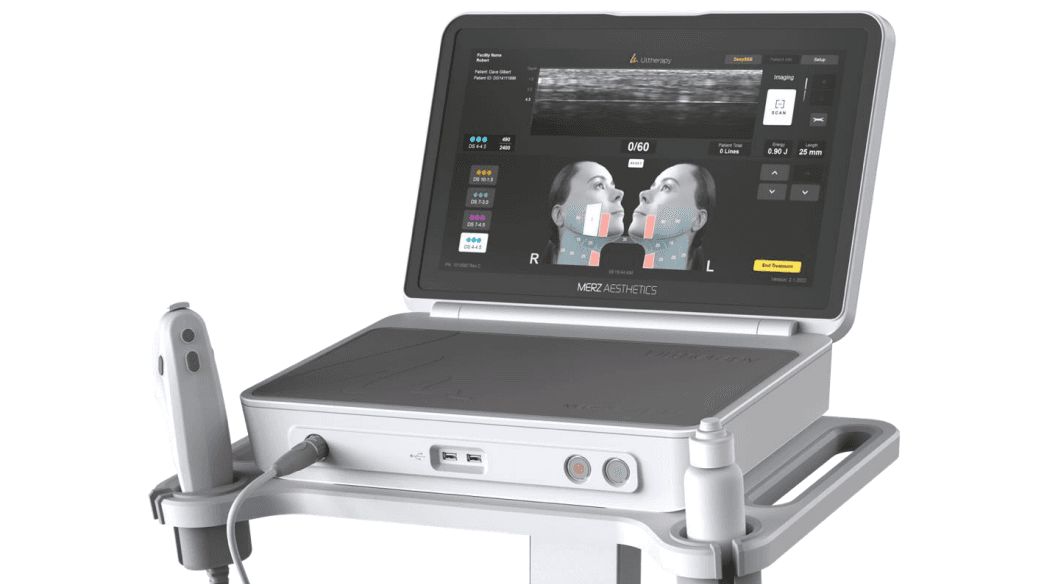
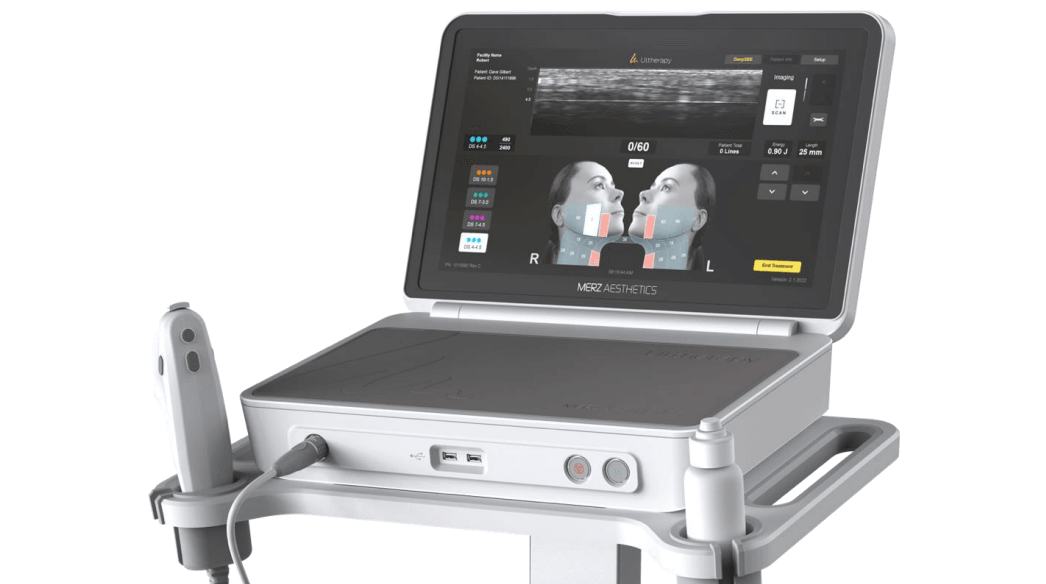
Ultherapy uses micro-focused ultrasound to deliver heat deep beneath the skin — down to the SMAS, the same connective layer a surgeon tightens in a facelift. That controlled heat triggers your body to build fresh collagen over the following weeks, so skin gradually lifts and firms. It is one of the few energy devices that lets us view the layers we're treating on an ultrasound image while we work, which is why placement and depth are so precise.
Here's the honest part: Ultherapy is not a facelift and won't remove significant hanging skin, and it's not a filler for deep static lines or lost volume. If you want dramatic surgical lifting, it will disappoint you. What it does beautifully is give natural, gradual tightening along the jawline, cheeks, brow and under-chin — the kind of result that makes people ask if you've been sleeping better, not if you've had work done.
Who it's really for
In my chair, the patients who love their Ultherapy results usually share a few things:
- Mild-to-moderate early sagging along the jawline, cheeks, or under the chin — not severe drooping.
- People in their 30s to 50s who want to slow and soften aging without surgery or downtime.
- Those who prefer one session a year over repeated maintenance appointments.
- Travelers who want a one-day, no-downtime treatment they can do and then keep sightseeing.
- Anyone who wants a natural lift and understands results build gradually over 2–3 months.
And who I steer elsewhere: if you have heavy, loose skin that clearly needs surgery, I'll tell you honestly that Ultherapy won't be enough — a lifting thread or a surgical referral makes more sense. If your main concern is fine texture and pores rather than laxity, Thermage or a skin booster is a smarter spend. I'd rather lose the booking than sell you the wrong thing.
How it compares — an honest comparison
The question I hear most is "thermage vs ultherapy vs density in Korea" — which one is worth it? There's no single winner; they work at different depths for different problems. Here's how I explain it:
In short: Ultherapy for lifting, Thermage for tightening and skin quality, and often the two combined for the best of both. Surgery is a different category we don't perform here — if that's what you need, I'll say so.
Before and after: what's realistic
Ultherapy before and after in Korea can look wonderful, but the honest timeline matters: you won't walk out transformed. There's a subtle immediate tightening, then the real change appears gradually as new collagen forms over 8–12 weeks, peaking around three months. Results depend on your age, skin thickness, and shot count — a 200-shot eye treatment and a 300-shot face treatment do different jobs. Well-chosen patients see a firmer jawline, a lifted brow, and a smoother under-chin.
Get a free 1:1 consultation
Message our English-speaking team — same price as locals, no pressure.
What to expect — step by step
- 1
1. Free consultation
We assess your skin laxity, discuss goals, and decide honestly whether Ultherapy — and how many shots — actually fits you. If it doesn't, I'll say so.
- 2
2. Numbing & prep
We cleanse, map the treatment zones, and apply numbing so you're comfortable before we begin.
- 3
3. The session
Using ultrasound imaging, we deliver focused energy line by line. A face session typically takes 30–60 minutes depending on shot count.
- 4
4. Back to your day
No dressings, no downtime. Slight redness or tenderness may last a day or two. You can wear makeup and fly home.
- 5
5. Results build over weeks
Collagen rebuilds gradually — you'll see firming develop over 2–3 months, and it can keep improving.
How we do it at Delphic — and why it matters
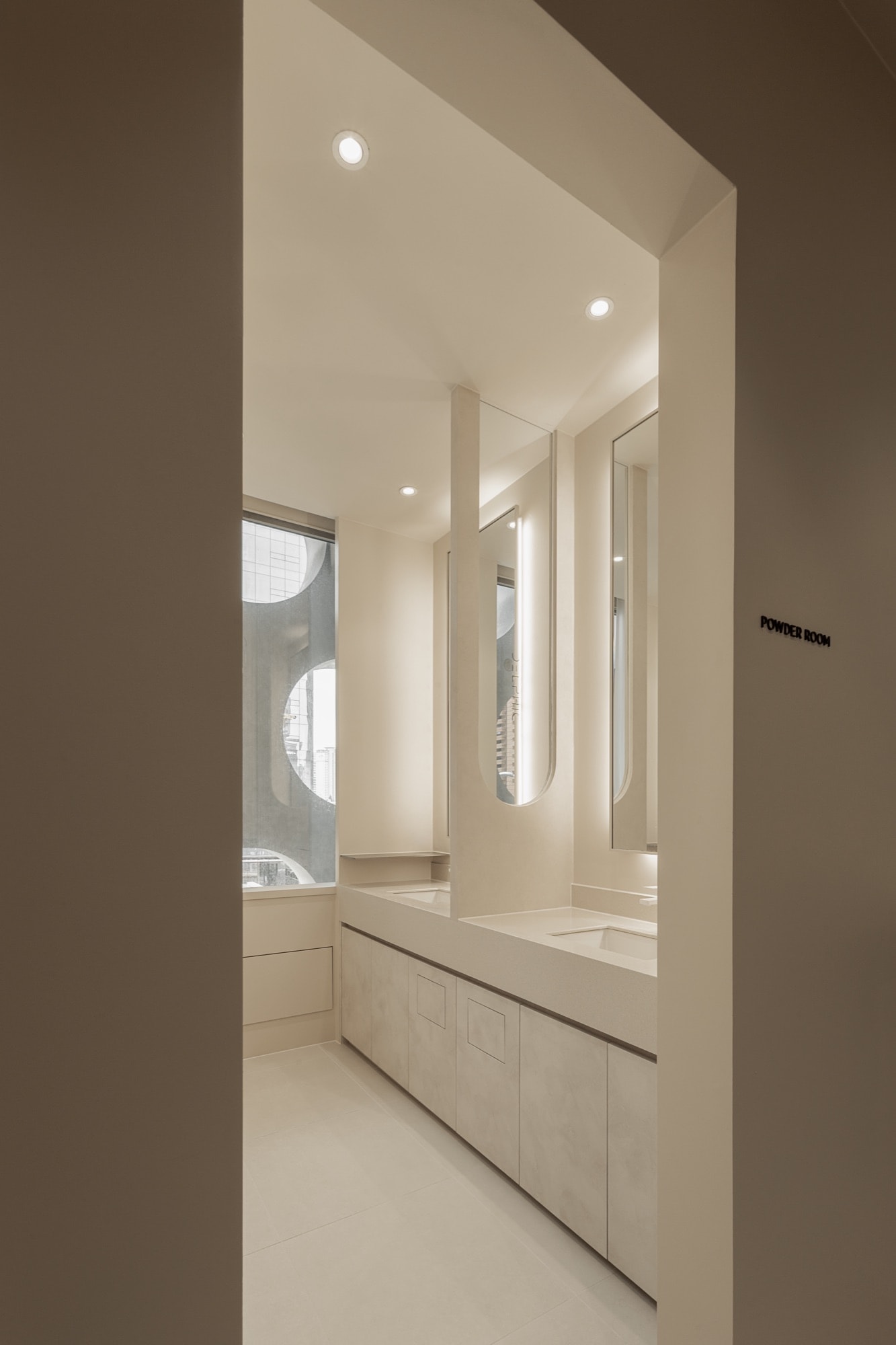
Every Ultherapy session here is planned and performed under doctor supervision on a genuine device — never a counterfeit or unbranded copy, which unfortunately do circulate. The shot count and depth are chosen for your anatomy, not from a fixed script, because the same 300 shots placed well or poorly give very different results. That judgment is exactly what you're paying for.
How much does it cost in Korea?
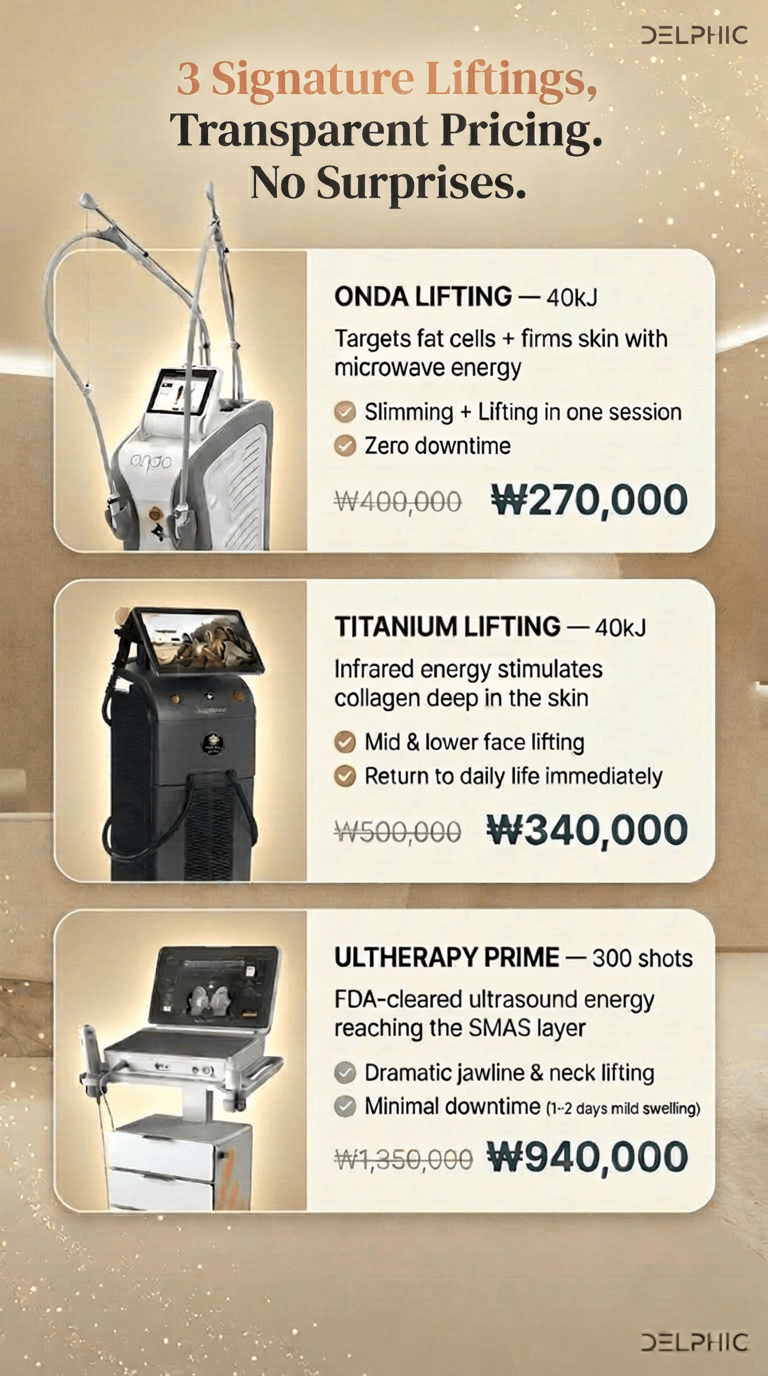
Now the real question. Ultherapy price in South Korea is driven mainly by two things: the area treated and the number of shots, because shots are the true unit of the treatment. A small eye/brow area needs fewer shots than a full face and jawline. Be cautious of unusually cheap ultherapy offers — they often mean very few shots, an off-brand device, or a hidden upsell once you're in the chair. Here are our genuine, published prices:
| EYE Ultherapy Prime 200 shots | ₩1,350,000$980 |
| FACE Ultherapy Prime 300 shots | ₩1,350,000$980 |
| Ultherapy Prime 300 shots (First-visit trial) | ₩940,000$680 |
| Ultherapy Prime 100 shots | ₩450,000$330 |
Coming from overseas? Here's how we make it easy
We have on-site English and Chinese interpreters, so nothing about your plan or price gets lost in translation. Ultherapy is one-day friendly with no downtime — many travelers do a free consultation and treatment the same day, then carry on with Seoul. We're a direct walk from Sinnonhyeon Station Exit 3, and the price you're quoted is the price you pay, identical to any local patient.
Start with a free 1:1 consultation
Verified Google reviews
4.7 · 260 Google reviewsI received ONDA lifting and Juvelook Skin treatment at Delpic Clinic. Before the procedure, Dr. K carefully examined my skin condition and explained everything in a kind and easy-to-understand way, which made me feel very comfortable and reassured. During the treatment, I could really tell that Dr. K was highly skilled, so I felt confident and at ease throughout the entire process. Overall, I was very satisfied with my experience. It’s definitely a clinic I would love to visit again.
I had a really great experience at Delphic Clinic. The staff were very friendly and made me feel comfortable from the moment I walked in. They explained everything clearly in English and didn’t try to oversell unnecessary treatments, which I really appreciated. The clinic is very clean and modern, and the whole process felt professional and well-organized. Overall, I would definitely recommend this clinic, especially if you’re a foreigner looking for a trustworthy place in Korea.
Before you commit to any number, come for a free, no-pressure 1:1 consultation. I'll look at your skin, tell you honestly whether Ultherapy is right, how many shots you'd actually benefit from, and whether combining it with something else makes more sense. If it's not for you, I'll tell you that too.
Get a free 1:1 consultation
Message our English-speaking team — same price as locals, no pressure.
Ultherapy is one of the most reliable non-surgical lifts we offer — but only when it's the right tool for your face and done properly. Judge it on value over the year, not on the lowest headline price. Come in, and let's decide together. — Dr. Hyunji Kim, Delphic Clinic, Gangnam, Seoul.
Frequently asked questions
Does it hurt?
You'll feel brief heat and a deep tingling as each line of energy is delivered — that sensation is actually the sign it's reaching the right depth. We numb beforehand, adjust the intensity to your comfort, and most patients describe it as very manageable rather than painful. Sensitive areas like the jawline are quick.
How long does it last?
Results from a proper session typically last 12–18 months, sometimes longer depending on your age, skin quality, and how much collagen you build. It's not permanent — your face keeps aging — but many patients repeat it once a year to stay ahead.
How does it compare to Thermage or Density?
Roughly: Ultherapy uses focused ultrasound to reach the deep SMAS layer and is best for lifting and tightening sagging. Thermage uses radiofrequency for overall skin tightening and texture. Density is a newer RF option. Many patients combine them — I'll tell you honestly in person which one your face actually needs.
Is there downtime?
No real downtime. You might have slight redness, mild swelling, or tenderness for a day or two, and occasionally small areas feel a little numb briefly. You can fly home, wear makeup, and return to work the same day.
How many sessions?
Ultherapy is usually done as a single session, then repeated once a year or so. It's not a course of many appointments like some skin boosters. The shot count matters more than the number of visits — that's what we plan together.
How much does it cost in Korea?
At Delphic, EYE Ulthera Prime (200 shots) is ₩1,350,000 and FACE Ulthera Prime (300 shots) is ₩1,350,000. See the article for what changes the price — and note you pay the exact same price as a local Korean patient.
Written by
Dr. Hyunji Kim
Dr. Hyunji Kim is the director and lead physician at Delphic Clinic in Gangnam, Seoul. She trained at Korea University Medical Center and personally performs consultations and procedures for both local and international patients.
Read next

Lifting
Ultherapy Korea: How I Lift Sagging Skin Without Surgery — A Gangnam Doctor's Honest First-Timer Guide
"Is Ultherapy actually worth it?" I get asked this every week. Here's my honest answer, from a Gangnam clinic.
Lifting
Ultherapy Price Korea: What You Really Pay for a Non-Surgical Lift — A Gangnam Doctor's Honest Value Guide
"How much does Ultherapy really cost in Korea — and am I being overcharged as a foreigner?" Here's my honest, number-by-number answer.

Lifting
Thermage Korea: How I Tighten Sagging Skin With RF Without Surgery — A Gangnam Doctor's Honest First-Timer Guide
"Is Thermage really worth it?" I get asked this every week. Here's my honest answer as a Gangnam doctor.