Onda Treatment in Korea: How I Tighten Skin & Melt Stubborn Fat Without Surgery — A Gangnam Doctor's Honest Guide
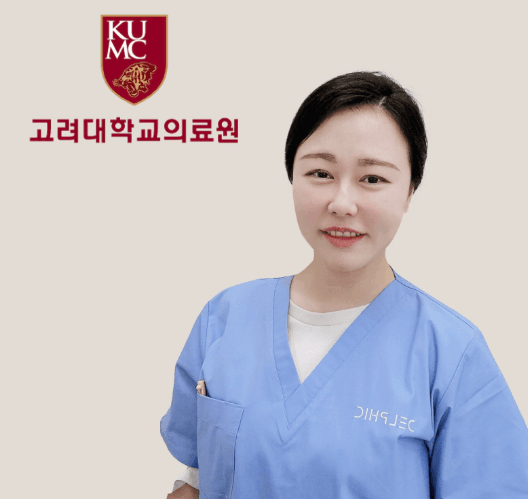
Dr. Hyunji Kim
2026-07-038 min read
Medically reviewed by Dr. Hyunji Kim · Last reviewed
Onda treatment is one of the most common questions I get from patients who want firmer skin without going under the knife — and the honest short answer is: it works well for the right person, and it's a waste of money for the wrong one. So let me tell you exactly who's who.
I'm Dr. Hyunji Kim, director at Delphic Clinic in Gangnam. I've treated a lot of faces and bodies with Onda, and I want to explain what it really does, what it can't do, and how to know if it's right for you — the way I'd explain it to a friend, not a sales script.
What Onda treatment actually is — in plain language
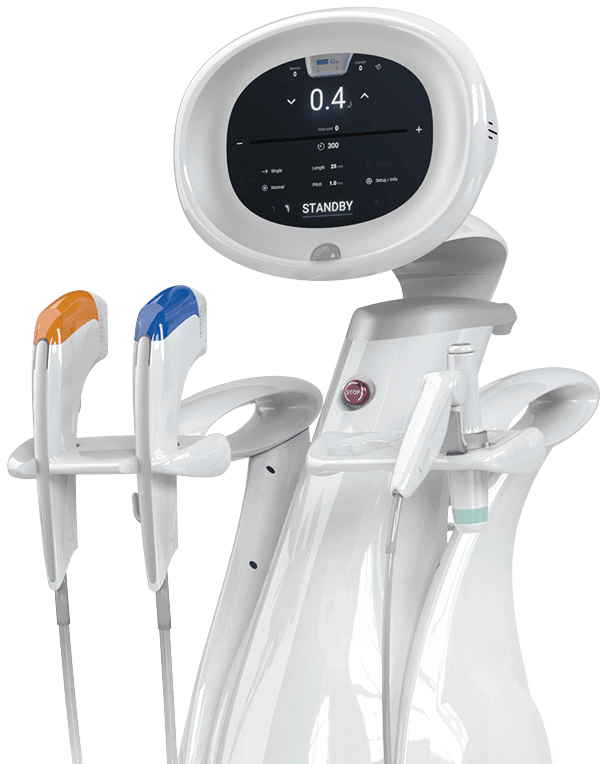
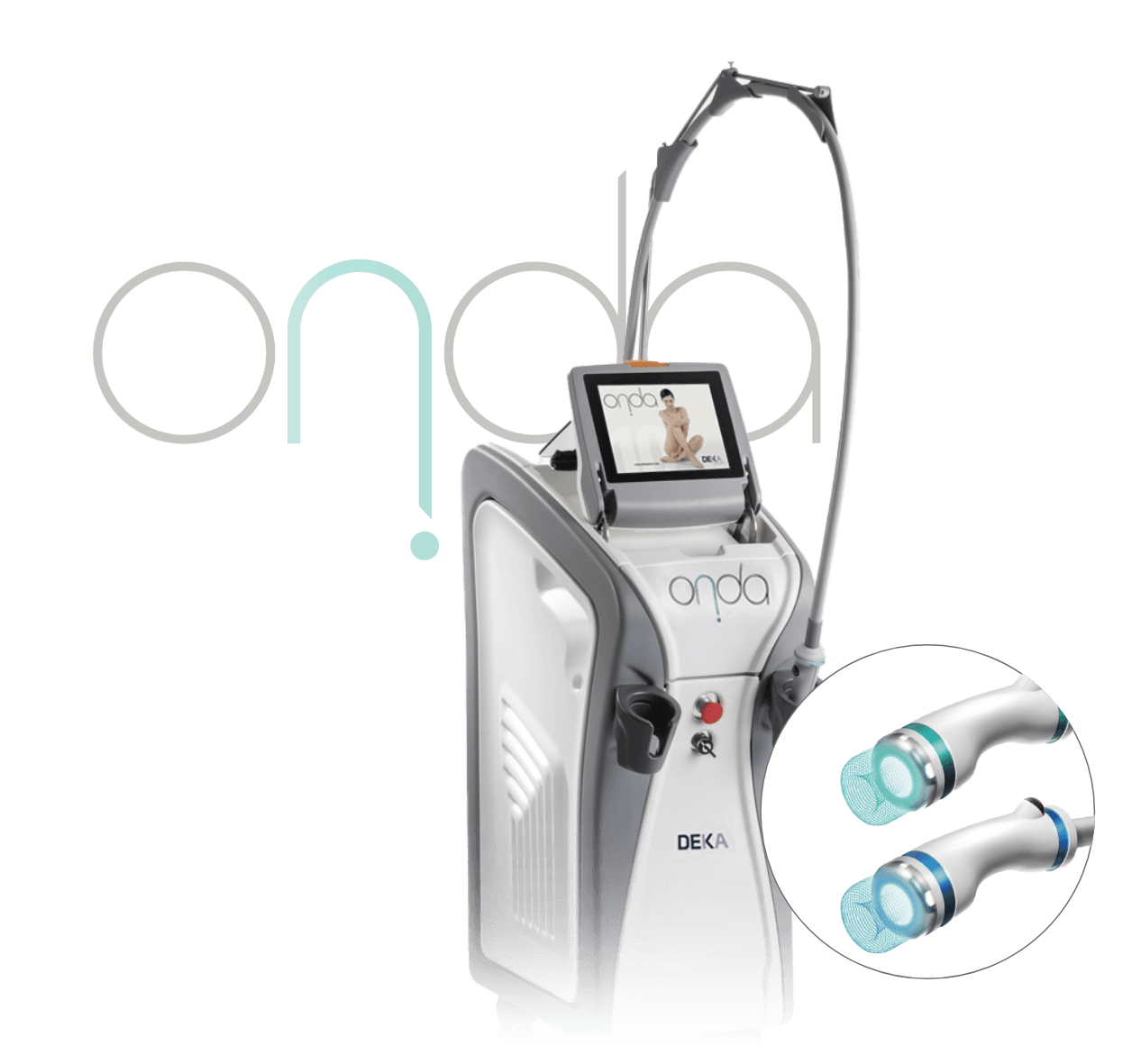
Onda is a device that uses microwave energy — the company calls them 'Coolwaves' — delivered through a handpiece that glides over the skin. These microwaves heat the deeper layers of your skin and the fat just beneath it. That controlled heat does two things: it stimulates your body to build new collagen (which tightens and smooths skin over time), and on body areas it can gently damage small fat cells so your body clears them away. The built-in cooling protects the surface, which is why it stays comfortable.
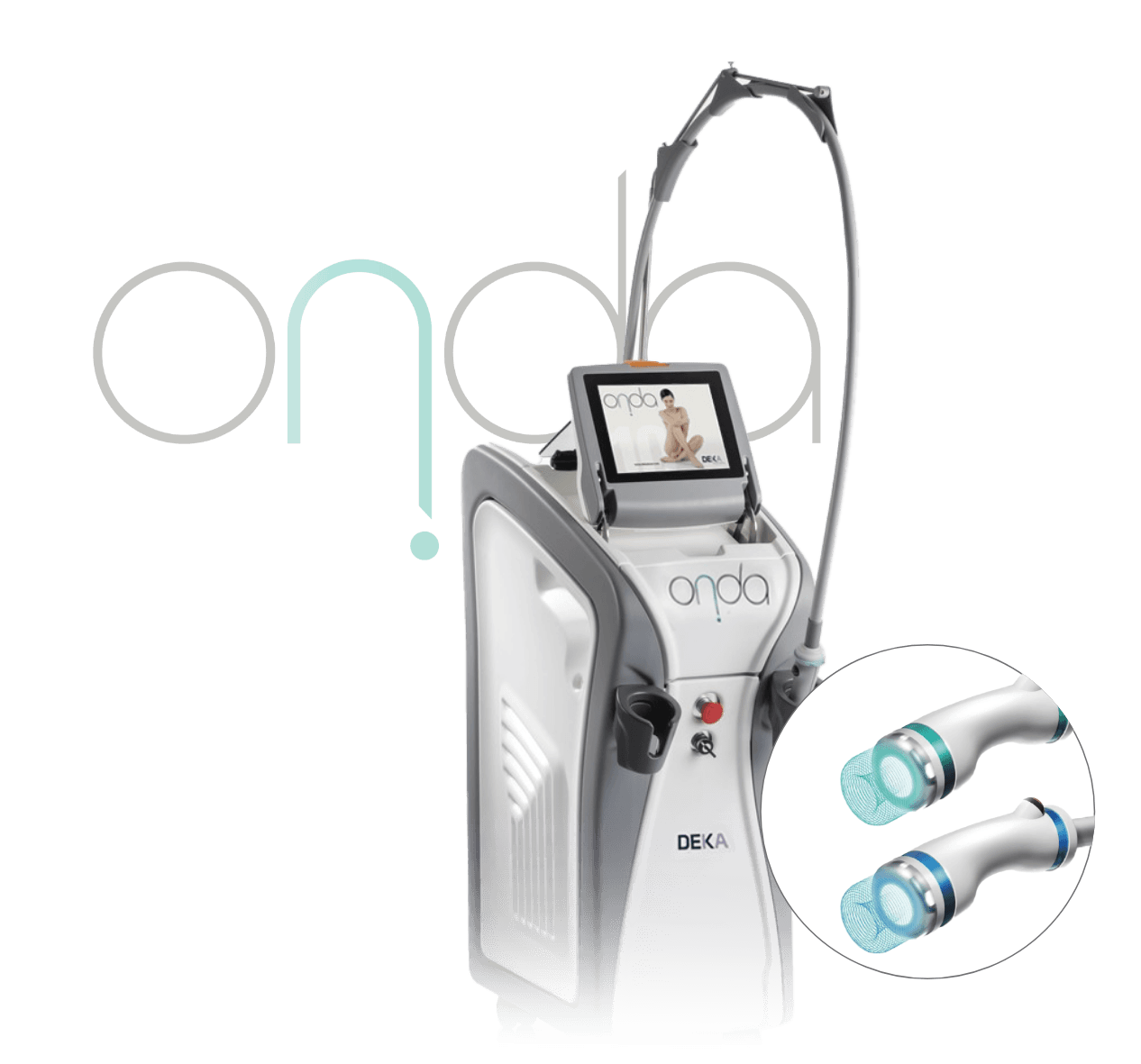
Here's what Onda is NOT: it is not a facelift, and it won't lift heavy, drooping skin or dramatically slim a large area of fat. If you're expecting a jaw transformation from one session, you'll be disappointed. Onda is a refinement and tightening tool — think 'firmer, tighter, a little more contoured,' not 'brand new face.'
Who Onda lifting is really for
In my chair, the patients who love their Onda skin tightening results usually share a few things:
- People with mild-to-moderate skin laxity who want a natural firming, not a surgical lift.
- Those bothered by a soft, slightly full jawline or under-chin area (submental fullness).
- Anyone wanting subtle body contouring on stubborn spots — tummy, flanks, bra bulge, inner thighs — that resist diet.
- Busy travelers who need zero downtime and can't take time off to recover.
- People in their 30s–50s who want maintenance and prevention rather than a big correction.
And who I steer elsewhere: if you have significant sagging jowls or heavy neck skin, I'll be honest that Onda alone won't satisfy you — you may need HIFU, thread lifting, or a surgical opinion. If you're looking to lose large amounts of fat, Onda is not a weight-loss treatment, and I'll say so.
How Onda compares — an honest comparison
Patients often ask how Onda skin tightening stacks up against the other non-surgical options we offer. Here's a general guide — the right choice really depends on your skin, examined in person.
In short: Onda is my go-to when someone wants gentle tightening plus a little fat reduction with no recovery time — and it pairs beautifully with HIFU when a firmer lift is also needed.
Before and after: what's realistic
Let me set honest expectations. Onda results are gradual. You may notice a little tightening within days from tissue contraction, but the real change comes as collagen rebuilds over 8 to 12 weeks. Skin looks firmer and smoother, a soft jawline looks a touch more defined, and treated body areas feel tighter. It's a refinement you and those close to you notice — not a dramatic overnight change. Results vary from person to person based on age, skin quality and how many sessions you do.
Get a free 1:1 consultation
Message our English-speaking team — same price as locals, no pressure.
What to expect — step by step
- 1
1. Free consultation
I examine your skin and the area you're concerned about, discuss realistic goals, and tell you honestly whether Onda — or something else — is your best option.
- 2
2. Prep
We cleanse the area and apply a gel so the handpiece glides smoothly. No injections and usually no numbing cream are needed.
- 3
3. The session
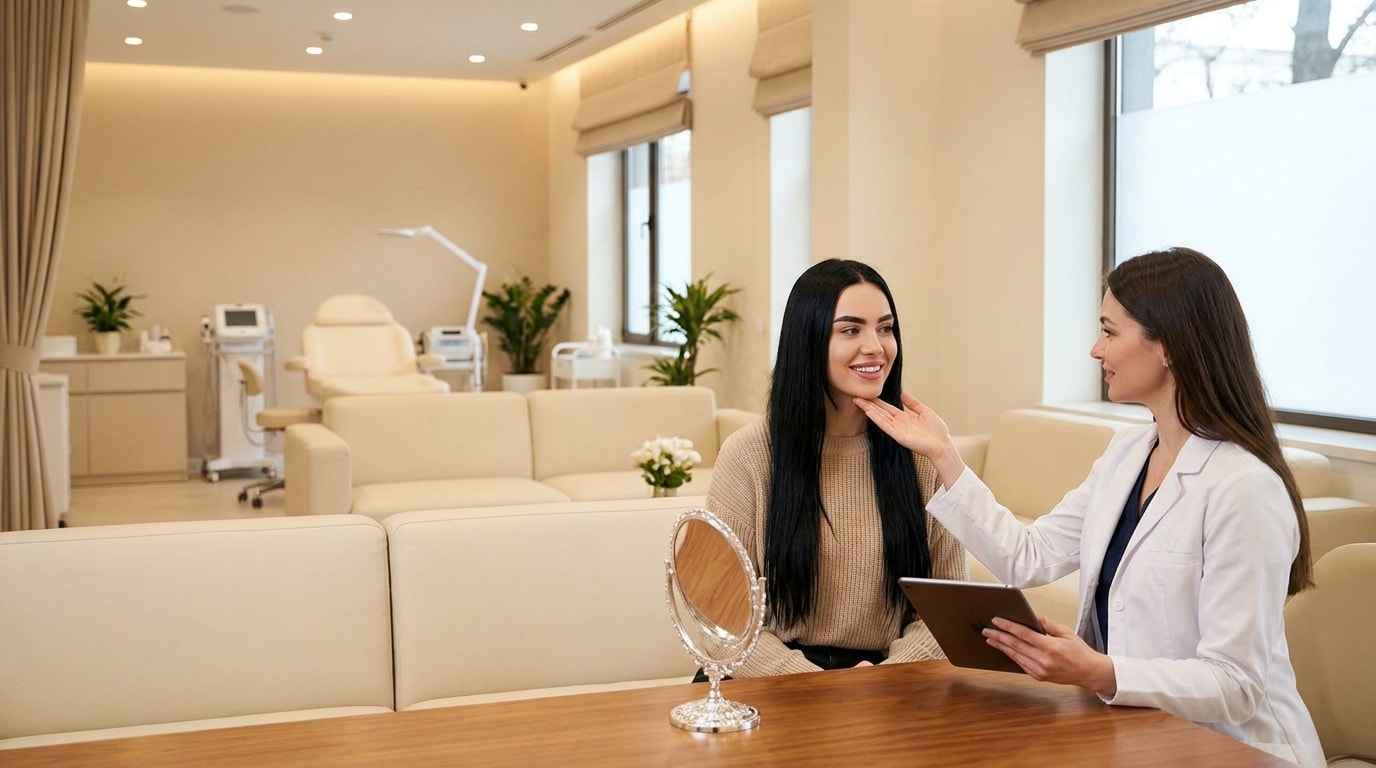
I move the Onda handpiece over the treatment area. You'll feel a deep, warming sensation with cooling in between. A face takes around 20–30 minutes; body areas a bit longer.
- 4
4. Back to your day
Mild warmth or redness may last a few hours, then you're free to go — makeup, sightseeing, dinner, all fine the same day.
- 5
5. Results build over weeks
Tightening develops over the following 2–3 months as collagen forms. If we planned a course, we space sessions about 3–4 weeks apart.
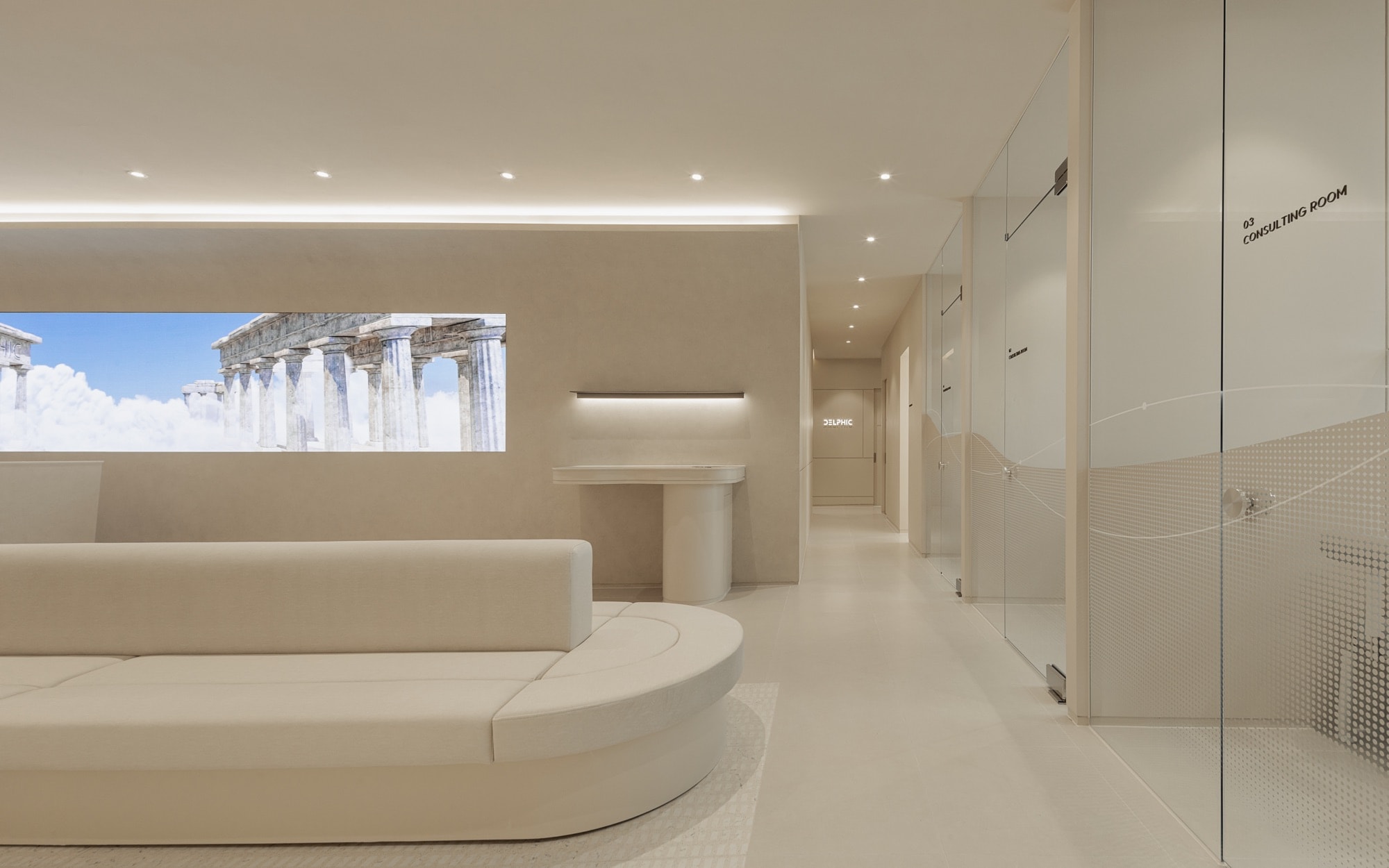
How we do Onda at Delphic — and why it matters
Every Onda treatment at Delphic is planned and supervised by a doctor — not handed off blindly. I map the energy settings to your skin thickness and the area, because too little does nothing and too much is uncomfortable and unnecessary. We use the genuine Onda device, not an imitation, and I'll always tell you if I think you'd get a better result from a different treatment. That honesty is the whole point.
How much does Onda treatment cost in Korea?
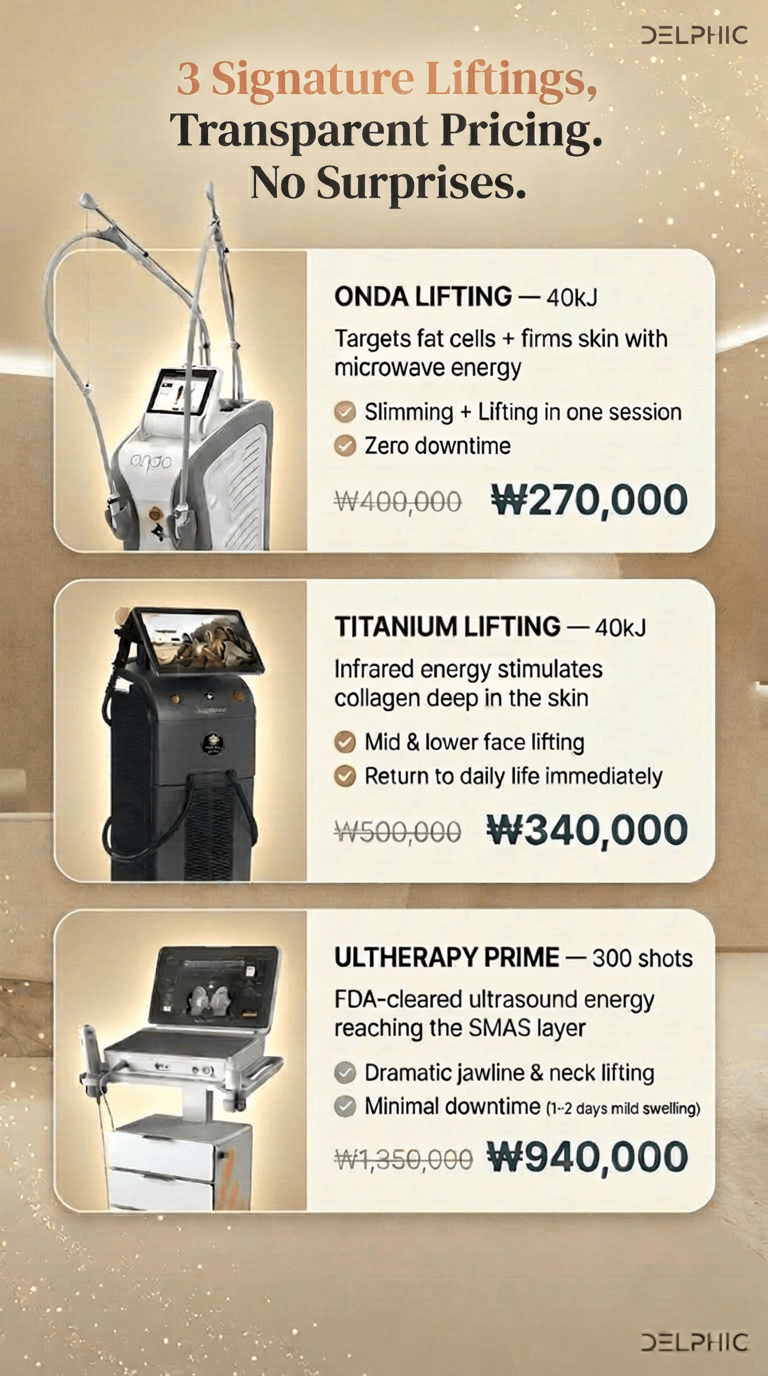
Onda pricing depends on the area and the energy delivered (measured in kj). Here are our genuine prices — the same ones a local Korean patient pays:
| ONDA Lifting (Face) 40kj | ₩400,000$290 |
| ONDA Lifting (Face) 60kj | ₩600,000$430 |
| ONDA Lifting (Body 1 area) 60kj | ₩600,000$430 |
| ONDA Lifting (Face) 40kj (First-visit trial) | ₩270,000$200 |
| Onda Lifting (Face) 60kj (First-visit trial) | ₩390,000$280 |
| Onda Lifting (Body 1 Area) 40kj (First-visit trial) | ₩270,000$200 |
| Onda Lifting (Body 1 Area) 60kj (First-visit trial) | ₩390,000$280 |
Coming from overseas? Here's how we make it easy
We're used to international patients. We have on-site English and Chinese interpreters, so nothing gets lost in translation. Onda is one-day-friendly with no downtime, so it fits neatly into a travel schedule — and we're a short walk from Sinnonhyeon Station Exit 3. Same price as locals, always, whether you're from Seoul or Singapore.
Start with a free 1:1 consultation
Patients who ask me this often ask next about Shrink Universe HIFU lifting in Korea, which I answer separately.
When a consultation turns to this topic, I often end up explaining how Onda lifting uses microwaves to tighten skin too.
Verified Google reviews
4.7 · 260 Google reviewsI received ONDA lifting and Juvelook Skin treatment at Delpic Clinic. Before the procedure, Dr. K carefully examined my skin condition and explained everything in a kind and easy-to-understand way, which made me feel very comfortable and reassured. During the treatment, I could really tell that Dr. K was highly skilled, so I felt confident and at ease throughout the entire process. Overall, I was very satisfied with my experience. It’s definitely a clinic I would love to visit again.
The best way to know if Onda is right for you is a free, no-pressure consultation. I'll look at your skin, tell you honestly what to expect, and if I think another treatment suits you better, I'll say so. You decide with real information — that's how it should be.

Get a free 1:1 consultation
Message our English-speaking team — same price as locals, no pressure.
Whatever you decide, I want you to make the choice with clear, honest advice — not hype. Come in, and let's figure out what actually fits you. — Dr. Hyunji Kim, Delphic Clinic, Gangnam, Seoul.
Frequently asked questions
Does Onda treatment hurt?
Most patients describe it as a warm, deep massage — not painful. The Onda handpiece moves continuously and has built-in cooling, so the sensation stays comfortable. For body areas some people feel more warmth, but we always work within your comfort. No numbing cream is usually needed.
How long do the results last?
Skin-tightening results typically build over 8–12 weeks as new collagen forms, and generally last 6–12 months depending on your skin, age and lifestyle. Fat reduction on body areas is more permanent, but maintenance sessions once or twice a year keep the tightening effect looking its best.
How does Onda compare to HIFU like Shurink?
Roughly: HIFU (Shurink) sends focused ultrasound to specific depths for a firmer lift, while Onda uses microwave Coolwaves that heat a broader volume of tissue and fat. Onda is gentler and better for skin laxity plus small fat pockets (like a soft jawline or bra bulge); HIFU is stronger for a defined lift. Many patients combine them.
Is there any downtime?
No real downtime. You may see mild redness or feel slight warmth for a few hours, and occasionally minor tenderness on body areas for a day or two. You can return to work, makeup and normal activity the same day — it's a genuinely one-day-friendly treatment.
How many sessions will I need?
It depends on your goal. For skin tightening, 1 session gives a subtle improvement but 3 sessions spaced 3–4 weeks apart give a clearer result. For body fat reduction, 3–4 sessions per area is typical. I'll give you an honest number at your consultation — not an upsell.
How much does Onda treatment cost in Korea?
See the prices in the article. At Delphic, ONDA Lifting for the face (40kj) is ₩400,000 and (60kj) ₩600,000, and one body area (60kj) is ₩600,000. Same price for locals and visitors — no foreigner mark-up.
Written by
Dr. Hyunji Kim
Dr. Hyunji Kim is the director and lead physician at Delphic Clinic in Gangnam, Seoul. She trained at Korea University Medical Center and personally performs consultations and procedures for both local and international patients.
Read next

Lifting
Onda Lifting in Korea: How I Tighten Skin With Microwaves — A Gangnam Doctor's Honest Guide
"Is Onda actually worth it?" I get asked this every week. Here's my honest answer, from a Gangnam clinic.
Lifting
Onda in Korea: How I Melt Stubborn Fat Without Surgery — A Gangnam Doctor's Honest Guide
"Can Onda melt my double chin without surgery?" I hear this almost every day. Here's the honest answer — with a real before & after, an Onda vs HIFU comparison, and what it costs.
Lifting
InMode Cost in Korea: What One Area, Full Face and a Trial Session Really Cost
InMode cost in Korea is lower than most visitors expect, but the number only means something once you know how many areas you need and whether FX or Forma fits your face. Here is the real menu and how I decide.