Atrophic Scar in Korea: How I Release Tethered Acne Scars With Subcision — A Gangnam Doctor's Honest Guide

Dr. Hyunji Kim
2026-09-188 min read

If you have an atrophic scar that simply won't respond to laser no matter how many sessions you try, there's usually a reason — and it's not your skin being stubborn. Depressed acne scars are often held down by fibrous strands of tissue anchoring them to the layers below. Until those strands are released, the scar physically cannot rise, no matter how much you resurface the surface.
I'm Dr. Hyunji Kim, director at Delphic Clinic in Gangnam. I see a lot of international patients who've already spent money on laser abroad and felt let down. This guide explains what subcision really does for depressed acne scars, who it genuinely suits, and — honestly — who it doesn't.
What subcision actually is — in plain language
Subcision is a small procedure that uses a specialized needle placed at the junction between the dermis and the fat layer underneath. There, the needle releases the fibrous scar tissue that's pulling your skin downward. By severing those collagen fibrous bands, the depressed area is freed to elevate — and the controlled injury triggers new collagen to fill the space. That's why it works for various acne scars and deep, indented scars that surface treatments miss.

Here's what it isn't: subcision is not a resurfacing laser and it's not a filler. It doesn't smooth texture or shrink pores on its own, and it won't erase discoloration. It solves one specific problem — a scar that's tethered down — extremely well, and leaves the rest to other tools.
Who acne scar subcision is really for
In my chair, subcision earns its place for a very particular type of patient:
- People whose skin is being visibly pulled down by fibrous scar tissue — you can often see the tethering when you smile.
- Those with deep, rolling acne scars that never fully improved with laser.
- Patients with chickenpox scars or other deep indented scars.
- Anyone whose atrophic scars have plateaued after repeated resurfacing treatments.
- People who want to address the cause under the skin, not just polish the surface.
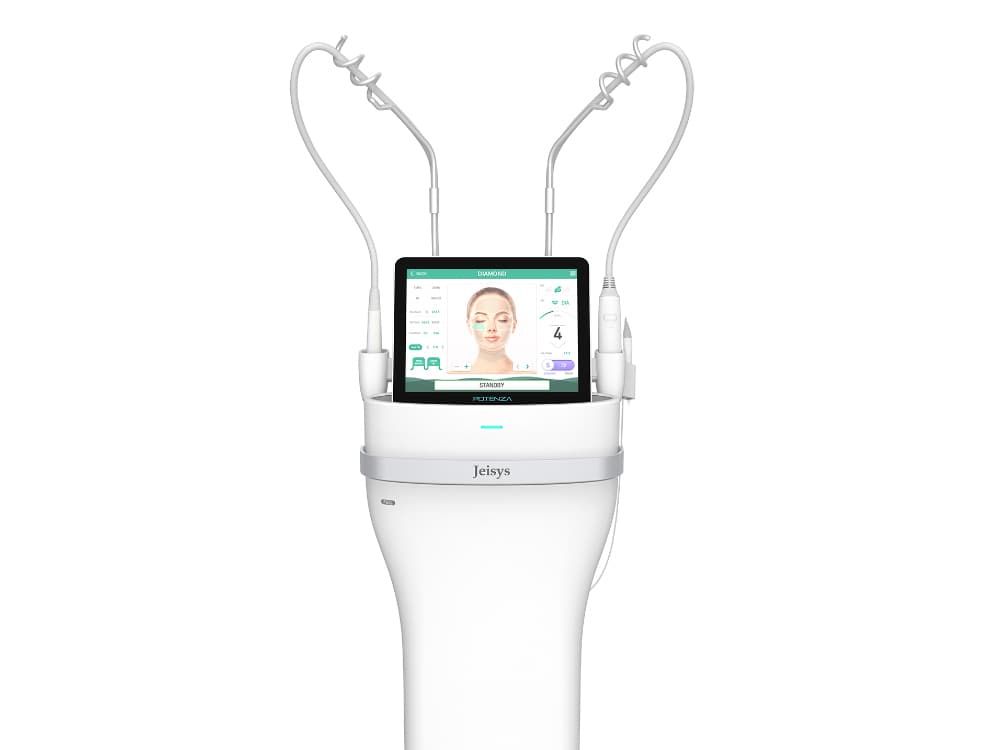
And who I steer elsewhere: if your scars are pure sharp "ice-pick" pits, subcision won't help much — those need a different approach. If your main concern is enlarged pores or overall texture, I'd usually point you toward RF microneedling like Potenza for pores and scars, or a resurfacing option such as Fraxel for texture and pigment. Often the best plan combines them.
How subcision compares — an honest comparison
No single tool fixes every scar. Here's roughly how subcision sits against the alternatives I use most for depressed acne scars.
The short version: subcision releases what's pulling a scar down; the others refine the surface. For many of my patients the winning strategy is subcision first, then resurfacing.
Before and after: what's realistic
Be patient with the timeline. Immediately after subcision the area is swollen and bruised, which can temporarily look worse. Real improvement is gradual — as new collagen forms over the following weeks, the released scar rises and settles. Deep atrophic scars usually soften noticeably rather than vanishing completely, and multiple sessions build the result. Individual healing varies a lot.
Get a free 1:1 consultation
Message our English-speaking team — same price as locals, no pressure.
What to expect — step by step
- 1
1. Free consultation
I examine your scars, stretch the skin to see which are tethered, and tell you honestly whether subcision — or something else — is the right call.
- 2
2. Numbing & prep
We apply topical anesthetic and add local anesthetic at each lesion so the procedure stays comfortable.
- 3
3. The session
Using a fine needle, I release the fibrous bands under each scar. Depending on how many lesions we treat, this takes about 30 to 60 minutes.
- 4
4. Recovery period
Plan for around 5 days of recovery. Expect bruising and mild swelling; we give you clear aftercare so healing goes smoothly.
- 5
5. Results build over weeks
As collagen fills the released space, the scar elevates over the following weeks. Deep scars may need a repeat session spaced apart.

How we do subcision at Delphic — and why it matters
Subcision is a doctor's procedure, not something to delegate. Knowing exactly which scars are tethered, at what depth to release, and how far to go without over-treating — that's judgment built over years. I perform every subcision myself, and I'd rather treat fewer lesions well than promise a miracle in one visit.

How much does subcision cost in Korea?
Subcision is priced by lesion and by the size of the area being released, so your total depends on how many scars we treat. Here are our genuine prices:
| [Scar] Subcision - 1 lesion (500 KRW coin size) | ₩100,000$70 |
| [Scar] Subcision - 1 lesion (Business card size) | ₩300,000$220 |
Coming from overseas? Here's how we make it easy
We have on-site English and Chinese interpreters, so nothing gets lost in translation during your consultation or aftercare instructions. We're a short walk from Sinnonhyeon Station Exit 3, the visit is one-day friendly, and — again — you pay exactly what a local pays. Just remember to allow for about 5 days of recovery when you plan your trip, in case bruising overlaps with photos or events.
Start with a free 1:1 consultation
The honest truth is that some scars are perfect for subcision and some aren't — and I can only tell by examining your skin in person. Come in for a free, no-pressure consultation and I'll tell you plainly whether it's worth it for you, or whether another approach would serve you better. If subcision isn't right, I'll say so.
Get a free 1:1 consultation
Message our English-speaking team — same price as locals, no pressure.
Scars feel permanent until someone addresses the right layer — and for tethered atrophic scars, that layer is under the surface. If you've been let down by laser alone, subcision might be the missing piece. Come talk to me, and let's look at your skin together. — Dr. Hyunji Kim, Delphic Clinic, Gangnam, Seoul.
Frequently asked questions
Does subcision hurt?
You'll feel pressure and some tugging, but we numb the area thoroughly with topical and local anesthetic first, so most patients find it very manageable. A dull ache and bruising afterward are normal for a few days.
How long do the results last?
Once a tethered atrophic scar is physically released and new collagen fills the gap, the improvement is long-lasting. Deep scars sometimes need a repeat session as fibrous tissue can partially re-form, but the elevation itself is durable.
How does subcision compare to laser?
Laser resurfaces the skin surface; subcision works underneath, cutting the fibrous bands that pull a scar down. For tethered, rolling atrophic scars that laser alone can't fix, subcision addresses the actual cause. They're often combined.
Is there downtime?
Yes — plan for about 5 days of recovery. Expect bruising and mild swelling at the treated lesions. It's not a lunchtime, zero-downtime treatment, and I'm honest about that upfront.
How many sessions will I need?
Some shallow scars improve significantly after one session; deep or numerous atrophic scars usually need 2–3 sessions spaced several weeks apart. We decide in person after examining your skin.
How much does subcision cost in Korea?
It's priced per lesion by size — see the price block in the article. You pay the exact same price as a local Korean patient, with no foreigner mark-up.
Written by
Dr. Hyunji Kim
Dr. Hyunji Kim is the director and lead physician at Delphic Clinic in Gangnam, Seoul. She trained at Korea University Medical Center and personally performs consultations and procedures for both local and international patients.
Read next

Skin & acne
Potenza RF Microneedling Korea: My Honest First-Timer's Guide to Pores & Scars — From a Gangnam Doctor
"Will Potenza really fix my pores and old acne scars?" I get asked this weekly — here's the honest answer, from a Gangnam clinic.
Skin & acne
Potenza Korea: How I Treat Pores & Scars With RF Microneedling — A Gangnam Doctor's Honest Guide
"Will Potenza actually fix my pores and scars?" I get this question every week — here's my honest answer, from a Gangnam clinic.

Skin & acne
Moles in Korea: How I Remove Them Cleanly With Minimal Scarring — A Gangnam Doctor's Honest Guide
"Will removing this mole leave a scar?" I get asked this every single week. Here's my honest answer, from a Gangnam clinic.