Thermage vs Ultherapy: Which One Your Face Actually Needs

Dr. Hyunji Kim
9 min read
Patients arrive having already decided which one they want, usually from a video where someone with a different face to theirs had a good result. Then the consultation becomes a negotiation instead of an assessment. I would rather explain the actual difference so you arrive with a question instead of a purchase order.
The honest framing is this: these two devices are not rivals. They operate at different depths on different tissue, and the correct question is not which is better but which layer is causing the thing you dislike in the mirror.
The difference that actually matters: depth
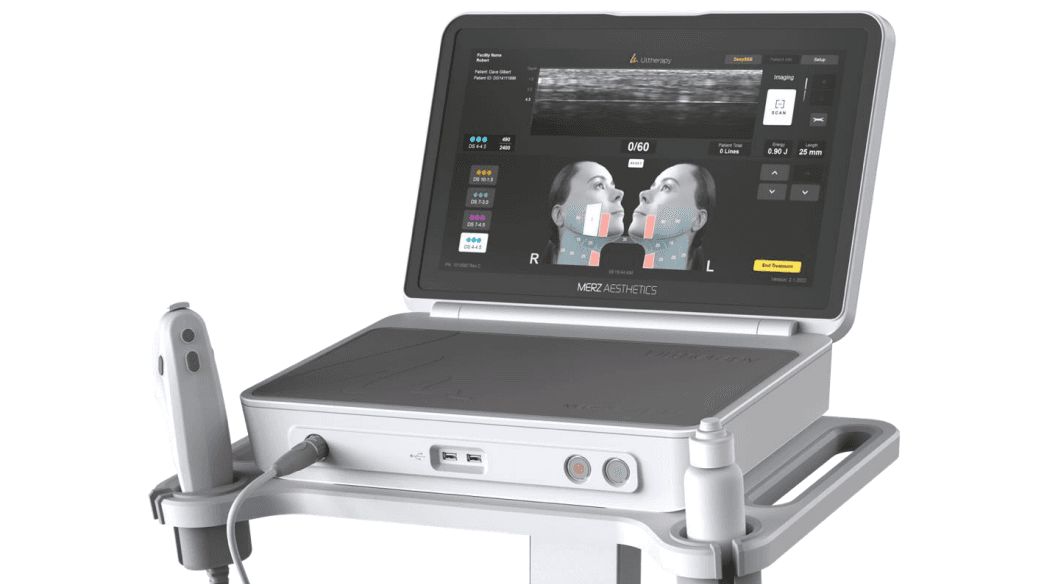
Thermage uses radiofrequency, which heats a broad volume of the dermis and the fat layer beneath it. Think of it as warming a wide area to encourage the skin to contract and rebuild collagen. Ultherapy uses focused ultrasound, which deposits energy at precise depths — including the SMAS, the fibrous layer a surgeon tightens during a facelift.
That depth difference is the whole story. Heat applied broadly to the dermis improves the quality of the skin itself. Energy placed precisely at the SMAS acts on the scaffold the skin hangs from. A complaint about texture and a complaint about contour are not the same complaint, and they do not respond to the same tool.
How I decide in the room
I ask you to do two things. First, tell me what you notice — not what you want done, but what you see. Second, I look at what happens when I lift the skin gently at the temple and jaw.
- 1
If gentle lifting restores the shape you miss
There is structure worth lifting, and focused ultrasound is the conversation.
- 2
If lifting changes little but the skin feels thin and crepey
The problem is skin quality rather than descent. Radiofrequency addresses that better.
- 3
If lifting restores it dramatically and you want that result held
We should talk honestly about whether energy devices will ever satisfy you, or whether you are describing a surgical result.
- 4
If the change you dislike is volume, not looseness
Neither device is the answer, and I will say so.

Why the internet comparison is usually useless
- Bring a photo from three to five years ago if you have one — it shows what actually changed.
- Say what you notice, not what treatment you want. The treatment is my job.
- Mention any filler or thread work and when it was done. It changes the plan.
- Be honest about your budget up front so we design around it rather than around a wish.
- The person in the video has a different amount of skin laxity, fat and bone structure to you.
- Before-and-afters are photographed months apart with different lighting and expression, which alone can create a visible 'result'.
- Nobody posts the course that did nothing, so the visible sample is skewed toward good outcomes.
- Settings and the number of lines or shots delivered vary hugely between clinics, and that changes the result more than the brand name on the machine does.
This is why I record the energy and shot count delivered to each zone. If you come back in a year, we can compare like with like instead of relying on memory and a phone photo.
Doing both — when it makes sense
Because they act on different layers, combining them is legitimate for some faces: ultrasound for the structural layer, radiofrequency for skin quality. They are not done in the same session, and the interval matters. What I will not do is sell both as a default package, because for many people one of the two is doing nothing that they needed.
| EYE Ultherapy Prime 200 shots | ₩1,350,000$980 |
| FACE Ultherapy Prime 300 shots | ₩1,350,000$980 |
| Ultherapy Prime 300 shots (First-visit trial) | ₩940,000$680 |
| Ultherapy Prime 100 shots | ₩450,000$330 |
Prices are the same for local and international patients — no visitor mark-up — so a combination recommendation here is not a pricing strategy. English and Chinese interpreters are on site if you want to ask the harder questions in your own language.
Consultation is free and takes about twenty minutes. Bring photos of yourself from a few years ago if you have them — they tell me more about what has changed than any description does. We are a direct walk from Sinnonhyeon Station Exit 3.
Get a free 1:1 consultation
Message our English-speaking team — same price as locals, no pressure.
Frequently asked questions
Which is better, Thermage or Ultherapy?
Neither is better in general — they solve different problems. Thermage works mainly on skin quality and surface tightening. Ultherapy reaches the SMAS layer that surgeons address in a facelift. If your complaint is crepey, loose-feeling skin, that points one way. If it is a jawline that has lost its edge, it points the other.
Can you have both?
Yes, and for some faces a combination makes sense because they address different layers. They are not usually done on the same day. The sequencing and the gap between them should be decided by whoever examined your face, not copied from someone else's plan.
Which one hurts more?
Most patients describe Ultherapy as sharper because the energy is delivered in focused points at depth. Thermage is more of a repeated heat pulse. Pain tolerance varies enormously and both are managed with cooling and, where appropriate, numbing.
How long does each last?
Both build collagen over roughly two to three months and the effect is usually discussed in terms of a year or so, varying with age, skin quality and lifestyle. Neither stops ageing — they slow the appearance of a particular kind of change.
If I can only afford one, which should I pick?
Pick based on your actual complaint, not the price. Buying the cheaper one for a problem it does not address is the most expensive choice available, because you have spent the money and still have the problem.
Written by
Dr. Hyunji Kim
Dr. Hyunji Kim is the director and lead physician at Delphic Clinic in Gangnam, Seoul. She trained at Korea University Medical Center and personally performs consultations and procedures for both local and international patients.
Read next

Lifting
Thermage FLX in Korea: How I Tighten Skin Without Surgery — A Gangnam Doctor's Honest Guide
"Is Thermage FLX really worth it?" I get asked this every week. Here's the honest answer, from a Gangnam clinic.

Lifting
How to Check a Medical Tourism Clinic License in Korea: My Ultherapy Buyer's Guide — A Gangnam Doctor's Honest Advice
"How do I know this clinic is legit?" It's the smartest question a foreign patient can ask me — so here's exactly how I'd check.

Lifting
Korean Treatment: How I Guide First-Time Foreign Patients Through Gangnam — A Doctor's Honest Guide
"Is getting a Korean treatment actually worth flying for?" I get asked this weekly. Here's my honest answer, from a Gangnam clinic.