
Korea Juvelook recovery center? Usually a hotel room will do

Dr. Hyunji Kim
2026-10-236 min read
Medically reviewed by Dr. Hyunji Kim (Director · Lead Physician) · Last reviewed · Edited by Dr. Hyunji Kim
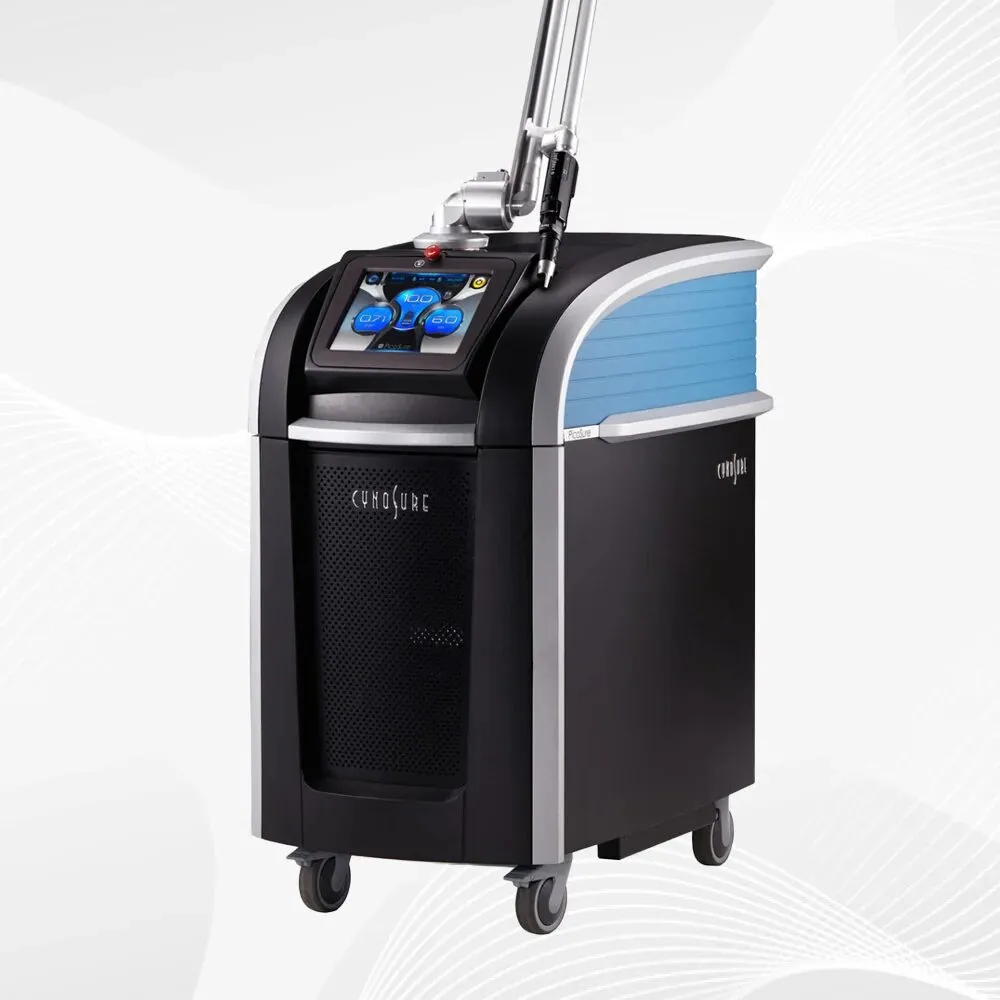
You almost certainly don't need a Korea Juvelook recovery center. Juvelook is an injectable skin booster, there's no general anesthesia and no wound to dress, so most people spend the evening after treatment in an ordinary hotel room. The worry I'd actually plan around is a later one: a small bump you can feel under your cheek three weeks after you've flown home, with no one nearby who knows what was injected. I'm Dr. Hyunji Kim, Director and Lead Physician at Delphic Clinic in Gangnam.
I trained at Korea University Medical Center, I'm a member of the Korean Filler Society and the Korean Academy of Aesthetic Surgery & Laser Medicine, and "where do I recover?" is a question visiting patients ask me often.
The fact that matters most for that worry is who holds the needle. At Delphic the doctor performs the treatment directly, so the person you can ask about your face later is the same person who injected it. The clinic is connected to exit 3 of Sinnonhyeon Station (Line 9 and the Shinbundang Line), which means the trip back to a Gangnam hotel is a subway ride, not a transfer.
Verified Google reviews
4.7 · 260 Google reviewsI received ONDA lifting and Juvelook Skin treatment at Delpic Clinic. Before the procedure, Dr. K carefully examined my skin condition and explained everything in a kind and easy-to-understand way, which made me feel very comfortable and reassured. During the treatment, I could really tell that Dr. K was highly skilled, so I felt confident and at ease throughout the entire process. Overall, I was very satisfied with my experience. It’s definitely a clinic I would love to visit again.
I had a really great experience at Delphic Clinic. The staff were very friendly and made me feel comfortable from the moment I walked in. They explained everything clearly in English and didn’t try to oversell unnecessary treatments, which I really appreciated. The clinic is very clean and modern, and the whole process felt professional and well-organized. Overall, I would definitely recommend this clinic, especially if you’re a foreigner looking for a trustworthy place in Korea.
If you're unsure whether your skin is a Juvelook case at all, two things are worth having ready before anything else: a daylight photo of your cheeks without makeup, and the dates you'll be in Seoul.
Get a free 1:1 consultation
Message our English-speaking team — same price as locals, no pressure.
What is Juvelook, and why doesn't it call for a recovery house?
Juvelook is generally described as a collagen stimulator built on PDLLA (poly-D,L-lactic acid), usually mixed with hyaluronic acid before injection. The hyaluronic acid gives a little early moisture. The PDLLA particles are there to prompt your own skin to lay down collagen around them, and that happens slowly, over weeks.
That timing explains the recovery question. What you see in the mirror the night of treatment is mostly fluid and needle marks, not the result. Recovery houses in Seoul grew up around surgery, where people go home with drains, stitches and swelling that needs nursing. An injectable that leaves small raised dots on the skin doesn't need that kind of care.
On our menu it appears as Juvelook · Ultracol, and I go through how it builds skin from within in more detail in my Juvelook skin booster guide. For this post, the point is practical: you need a quiet evening, a clean pillowcase and some patience, not a nurse.
The first few days, in plain terms
As general guidance, and not a promise for your skin, the first days after a PDLLA booster tend to look like this.
One menu fact gives a sense of scale.
The last row is where people get impatient. Most early verdicts on Juvelook are written before collagen has had time to form, which is why I wrote about reviews that judge Juvelook too early.
Who Juvelook suits, and who I'd point elsewhere
Juvelook is a skin-quality treatment. It suits people whose complaint is texture: fine crepiness, shallow acne scars, enlarged pores, skin that looks thin and tired up close. It's one of the products in our pore and scar programs, which run as a series of sessions at four-week intervals, because the change comes from repeated collagen building.
It doesn't suit every face, and this is where I'd rather you hear it before you book flights:
- Deep folds or hollow cheeks. Lost volume is a filler question. A booster improves the skin over the hollow, not the hollow.
- Heavy sagging along the jaw. Juvelook can't lift tissue that has dropped. That's a conversation about lifting devices.
- Thin, dark under-eye skin. This area needs its own decision; I explain how I weigh it in when I choose under-eye filler versus a booster.
- An event next week. If you need a visible change by a fixed date soon, a collagen stimulator is the wrong tool for this trip.
If one of those describes you, you don't need to come in for Juvelook. Bring the real concern instead, and the conversation starts there.
What if a lump appears after I'm home?
In short, this is the question behind most searches for a Korea Juvelook recovery center, and it deserves a real answer rather than a reassuring line.
Risks and side effects to know
The common reactions are temporary: redness, swelling, tenderness, small bumps at the injection points and sometimes bruising. The U.S. Food and Drug Administration lists these as typical injectable filler reactions, and for most people they settle over days.
The less common one is the reason for planning. Poly-lactic acid injectables can occasionally form firm nodules, and case reports describe foreign-body reactions appearing long after the injection, sometimes months later (Annals of Dermatology, 2020). Rarely, any injectable can enter a blood vessel; the FDA notes this serious risk. Sudden blanching of the skin, severe pain or any change in vision needs urgent medical care wherever you are, not a message to Seoul.
As general medicine, it's usually wiser to wait or skip Juvelook if you have:
- active acne, infection, cold sores or a rash in the area to be treated
- a recent laser, peel or other procedure on the same skin
- pregnancy or breastfeeding
- a known allergy to any ingredient, or a history of keloid scarring
- current or recent isotretinoin, or an autoimmune condition that's flaring
If a mole in the area has changed, itches or bleeds, have it examined first; I cover the warning signs in when an itchy mole should be checked.
A note to keep on your phone before you fly
The U.S. Centers for Disease Control and Prevention advises medical travelers to carry records of what was done and to plan follow-up at home (CDC, Medical Tourism). For an injectable, that note can be short:
- Product name exactly as written (Juvelook, Juvelook Skin, or a combination)
- Amount and areas treated
- Date of treatment
- The clinic's phone number: +82-2-511-8818
- Any medicines you were taking that week
A dermatologist at home can't help you much with "some Korean booster." They can help with a product name, a date and an area.
How a short Seoul trip fits around it
The clinic is open Monday to Friday from 10:30 to 21:00 and Saturday from 10:30 to 17:00, and closed on Sundays. Same-day treatment is possible, so a consultation and an injection can happen in one visit. My advice is to put it early in your trip, not on the morning of your flight, so the needle marks have closed before you sit in a cabin for twelve hours.
If you'd like more than one thing done in a single day, the treatment menu on our English site lists one-day packages; one skin booster package pairs Rejuran Healer and Juvelook Skin with LDM in a hydrating mode. Korean and international patients pay the same price, and consultations run 1:1 with English and Chinese interpretation on site.
If you're aiming for a full series, be realistic about trips: our pore and scar programs space sessions four weeks apart, so a one-week visit covers one session, and the rest would mean returning.
If you'd like to start, send a daylight photo of your face without makeup and your Seoul dates on WhatsApp, along with the one question on your mind, for example whether your concern is texture or volume. You can also book a 1:1 consultation in person, with English and Chinese interpretation on site, at exit 3 of Sinnonhyeon Station.
Frequently asked questions
Can I fly home the day after Juvelook?
Injectable boosters don't usually restrict flying, and many people travel the next day. Swelling can feel more noticeable on a long flight, so drink water, skip alcohol on board and avoid pressing on the treated areas. If you have a choice, leave a day or two between treatment and departure.
How many Juvelook sessions does a visitor usually need?
It depends on how deep the texture problem is. Collagen builds over a series, and our pore and scar programs space sessions four weeks apart, so one trip usually covers one session. The number for your skin is set at the consultation.
Is Juvelook the same thing as Rejuran?
No. Rejuran uses polynucleotide (PN) derived from salmon DNA to support skin repair, while Juvelook is a PDLLA-based collagen stimulator. Our menu does combine them: Rejuvelook pairs Rejuran with Juvelook Skin in one session.
Can Juvelook be done on the same day as a laser or microneedling?
Yes, in some combinations. Our menu lists Potenza with Juvelook and Fraxel with Juvelook as single-session packages. Whether a combination fits your skin on that day is decided at the consultation, especially if your skin is reactive.
Should I stop my medicines before the injections?
Blood thinners and some supplements can make bruising more likely, but never stop a prescribed medicine without asking the doctor who prescribed it. Bring a list of what you take so it can be reviewed before treatment.
Written by
Dr. Hyunji Kim
Dr. Hyunji Kim is the director and lead physician at Delphic Clinic in Gangnam, Seoul. She trained at Korea University Medical Center and personally performs consultations and procedures for both local and international patients.
Read next
Skin boosters
Korea Juvelook recovery fund: save a few days off, not a week
Most people need a few days of leave for Juvelook, not a week. The bumps and pinkness usually fade within days, and the collagen change builds over the following weeks at home.
Skin boosters
Korea Juvelook recovery program: how many nights, how many trips
Each Juvelook session usually needs one or two nights in Seoul, because the bumps settle within days. The collagen change takes weeks, though, so plan your trips around the whole series.
Skin boosters
Choosing the best korean skin booster injection: seven questions to settle before you fly
There is no single best korean skin booster injection; the right one matches what your skin is missing. Seven consultation questions show whether that is Rejuran, Juvelook, PDRN or SkinVive.