Moles in Korea: How I Remove Them Cleanly With Minimal Scarring — A Gangnam Doctor's Honest Guide

Dr. Hyunji Kim
2026-09-188 min read

Moles are one of the most common things patients ask me to remove — and one of the most misunderstood. Whether it's a tiny flat spot on the cheek that catches on makeup, or a raised mole that keeps snagging on a razor, most people just want it gone cleanly, without a scar to remember it by. So let me walk you through what mole removal in Korea actually involves, honestly.
I'm Dr. Hyunji Kim, director at Delphic Clinic in Gangnam. I remove moles, skin tags, and small keratoses week in and week out, and I've learned that the outcome depends far less on the laser and far more on the judgment behind it. Here's what it really does — and what it doesn't.
What mole removal actually is — in plain language
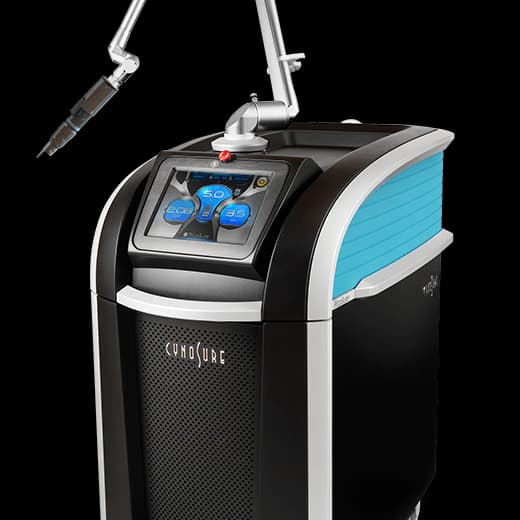
Laser mole removal works by precisely targeting the pigment sitting deep within the skin, breaking down and removing only the lesion while minimizing damage to the healthy tissue around it. That precision is the whole point: it's what reduces pain and lowers the chance of an obvious scar, leaving you with clearer, cleaner skin. A single spot usually takes 10-20 minutes from start to finish.

Here's what it isn't: it's not a magic eraser that leaves zero trace instantly. The treated spot will form a small scab and needs roughly 3-7 days to heal. And it is emphatically not a substitute for medical assessment — if a mole looks unusual, is changing, or worries me, removing it with a laser is the wrong first move. That's a boundary I won't cross for anyone's convenience.
Who mole removal is really for
In my chair, the people who get the best results from laser mole removal usually fall into a few clear groups:
- Anyone who simply wants to remove a benign mole for cosmetic reasons
- People who want clear, clean skin without an obvious raised or pigmented spot
- Those who want removal with minimal pain and minimal scarring
- Anyone with a mole that catches on razors, clothing, or makeup and is a daily nuisance
- People wanting small skin tags, milia, or seborrheic keratoses tidied up at the same time
And who I steer elsewhere: if a mole is asymmetrical, has irregular borders, is changing color or size, or bleeds without reason, I don't laser it — I recommend proper evaluation, and possibly a biopsy or surgical excision, which is not something we perform here. Deep pigmentation left behind after minor procedures is a different concern too, and for stubborn discoloration I sometimes point patients toward gentler pigment-targeting options rather than aggressive removal.
How it compares — an honest comparison
Mole removal isn't the only way to deal with spots on the skin, so here's how laser removal stacks up against the alternatives you might be weighing.
In short: for a small, clearly benign mole, laser removal is usually the cleanest, fastest route. For flat pigment or freckling that isn't a raised mole, a pigment-focused approach fits better — and if you're curious how that side of things works, I've written a full guide to how I even out skin tone and fade stubborn marks.
Before and after: what's realistic
Let me set honest expectations. Right after treatment there's a small scab where the mole was — this is normal and part of healing, not a complication. Over the next 3-7 days that scab lifts, revealing fresh pink skin underneath. That new skin fades and blends over the following weeks. So the 'after' you're picturing — smooth, even skin — is real, but it arrives gradually, not the same afternoon. Rushing the scab or picking at it is the fastest way to a mark, so patience genuinely matters here.
Get a free 1:1 consultation
Message our English-speaking team — same price as locals, no pressure.
What to expect — step by step
- 1
1. Free consultation
I examine each mole in person, check that it's suitable for laser removal, and flag anything that needs proper assessment instead. No pressure, no upselling.
- 2
2. Numbing & prep
We cleanse the area and apply topical numbing cream so the actual removal is comfortable — most people feel only mild warmth.
- 3
3. The session
Using the precision laser, I remove only the lesion while sparing the surrounding skin. A single spot takes about 10-20 minutes.
- 4
4. Back to your day
You leave with the treated spot protected. There's no need to rest at home — just aftercare instructions to follow.
- 5
5. Healing over 3-7 days
A small scab forms and naturally lifts within 3-7 days. Keep it clean, moisturized, and strictly out of the sun while the new skin settles.

How we do it at Delphic — and why it matters
Every mole is assessed and treated by a doctor here — not handed off. That matters because the single biggest factor in a scar-free result is knowing exactly how deep to go and when to stop. I'd far rather remove a deep mole in two careful passes than push too hard in one and leave a dent. And if a spot doesn't belong under a laser at all, you'll hear that from me directly.

How much does mole removal cost in Korea?
Mole removal is one of the most affordable treatments we offer, and the price depends mainly on the size of the mole. Here are our genuine prices:
| Mole Removal 1 Spot (2mm or less) | ₩10,000$10 |
| Mole Removal 1 Spot (over 2mm) - Price varies by size | ₩20,000$10 |
| Body Mole Removal 1 Spot (Varies by size) - Price for over 2mm varies by size | ₩20,000$10 |
| Milia/Wart/Skin Tag Removal 1 Spot (Varies by size) - Price for over 2mm varies by size | ₩20,000$10 |
| Mole removal (1 mole, 2mm or more) | ₩20,000$10 |
| Removal of 1 body mole (varies by size) | ₩20,000$10 |
| Removal of 1 seborrheic keratosis/wart/skin tag (varies by size) | ₩20,000$10 |
Coming from overseas? Here's how we make it easy
Mole removal is genuinely one-day-friendly: consultation and treatment happen in the same short visit, and you can fly home soon after with simple aftercare. We have on-site English and Chinese interpreters, so nothing gets lost in translation when I explain which spots to remove and which to watch. We're a direct walk from Sinnonhyeon Station Exit 3 — and yes, you pay the same price a local does.
Start with a free 1:1 consultation
If you have a mole, skin tag, or spot you're unsure about, come in for a free 1:1 consultation. I'll look at it honestly, tell you whether laser removal is the right call, and never pressure you into treating something that should simply be monitored. That honest first look is the most important part.
Get a free 1:1 consultation
Message our English-speaking team — same price as locals, no pressure.
Getting rid of a mole should feel simple, safe, and free of surprises — and with the right judgment behind it, it usually is. If you'd like an honest opinion on yours, I'd be glad to take a look. — Dr. Hyunji Kim, Delphic Clinic, Gangnam, Seoul.
Frequently asked questions
Does mole removal hurt?
Most patients find it very manageable. We apply topical numbing cream before treatment, so during the actual removal you feel little more than mild warmth or a light tingling. The whole thing takes only 10-20 minutes, and any tenderness afterward is minor.
How long do the results last?
When a mole is fully removed, it's gone for good in that spot. Occasionally a very deep mole needs a second touch-up, but a properly removed mole does not grow back in the same place. New, unrelated moles can appear over your lifetime — that's just skin doing its thing.
How does it compare to surgical excision?
For most small, benign moles, laser removal is quicker, has less downtime, and leaves a smaller mark than cutting-and-stitching. Larger or suspicious lesions may still need surgical excision or a biopsy — which is a referral, not something we push you into.
Is there downtime?
There's no real 'downtime' in the sense of resting at home — you can return to your day right away. But the treated spot forms a small scab and needs 3-7 days to heal. During that window you keep it protected and out of the sun.
How many sessions will I need?
Most flat or small moles are removed in a single session. Deeper or larger moles occasionally need a second visit after the first has healed, so we don't over-treat and risk a scar. We'll tell you honestly at the consultation.
How much does mole removal cost in Korea?
A small mole (2mm or less) starts at ₩10,000, and larger moles, body moles, warts, or skin tags start at ₩20,000 with the exact price depending on size. See the price block below — same price for locals and visitors, no foreigner mark-up.
Written by
Dr. Hyunji Kim
Dr. Hyunji Kim is the director and lead physician at Delphic Clinic in Gangnam, Seoul. She trained at Korea University Medical Center and personally performs consultations and procedures for both local and international patients.
Read next

Skin & acne
PicoSure Korea Cost: What You'll Really Pay for Toning — A Gangnam Doctor's Honest Value Guide
"How much does PicoSure really cost in Korea — and is the package worth it?" I get asked this weekly. Here's the honest answer.

Skin & acne
Atrophic Scar in Korea: How I Release Tethered Acne Scars With Subcision — A Gangnam Doctor's Honest Guide
"Why won't my acne scars respond to laser?" I hear this every week — and often the answer is subcision. Here's my honest guide.

Skin & acne
Post Inflammatory Erythema: How I Calm Red Acne Marks With GV Laser — A Gangnam Doctor's Honest Guide
"Why are my acne marks still red months later?" I get asked this weekly — here's my honest answer, from a Gangnam clinic.