
PDO Thread Size in Korea: Does a Thicker Thread Mean More Days Before You Fly?
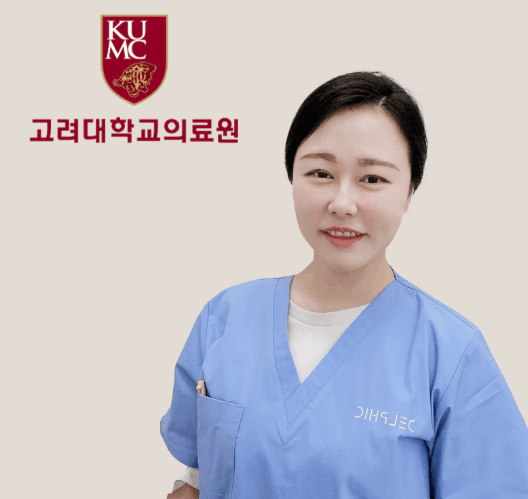
Dr. Hyunji Kim
2026-11-069 min read
Medically reviewed by Dr. Hyunji Kim (Director · Lead Physician) · Last reviewed · Edited by Dr. Hyunji Kim
Korea PDO thread size: if the thicker barbed threads are the ones that actually lift, does choosing them mean more days in Seoul before you can fly home?
Usually, yes. Fine mono threads, about as thin as an acupuncture needle, tend to leave pinpricks and mild puffiness for a few days. Thicker cog threads for the jawline and jowls more often bruise and feel tight for one to two weeks, so I'd plan about five to seven days in Seoul for cogs and two or three for fine threads.
Hello, I'm Dr. Hyunji Kim, Director · Lead Physician at Delphic Clinic in Gangnam. I come from Korea University Medical Center and I'm a member of the Korean Filler Society and the Korean Academy of Aesthetic Surgery & Laser Medicine.
For a short trip, three facts matter here. The threads are placed by a doctor, and treatment can happen on the same day as your consultation, so the consult doesn't cost you an extra day. Weekday hours run until 21:00, an English interpreter is on site at no extra charge, and the 1:1 consultation is free.
If you'd like to know which thread type fits your days, send a front and a side photo of your jawline in daylight on WhatsApp with your arrival and departure dates, and ask how many days that plan would need. The dates matter as much as the photo, because they decide which threads are realistic for this trip.
Get a free 1:1 consultation
Message our English-speaking team — same price as locals, no pressure.
What the numbers on a PDO thread packet mean
Every PDO thread comes in a packet printed with two or three numbers. The first is the needle or cannula gauge, written like 19G or 29G. A higher gauge means a thinner needle, so 29G is fine and 19G is noticeably thicker. The second is the length in millimetres, and some packets add a suture size such as 2-0 or 5-0, where 5-0 is the finer thread.
In general, fine mono threads come preloaded in needles of around 27 to 30 gauge and are a few centimetres long. They go in as a mesh to support skin quality and don't reposition anything. Cog threads carry small barbs that grip and hold tissue. They usually sit in thicker cannulas, often around 18 to 21 gauge, and are long enough to run from the jowl up toward the temple or behind the ear.
So a question about Korea PDO thread size really has three parts: the gauge, the length, and how many threads go into each side. I've written separately about the difference between smooth and cog PDO threads and who each suits. Here the question is what size does to your calendar.
One tip almost nobody mentions: ask to see the packet before the threads go in, and take a photo of the label. If something needs attention after you're home, a doctor there can't tell a 19G cog from a 29G mono by touch, and that label answers their first question.
Does a thicker thread lift more?
Not by itself. The lift comes from the barbs gripping tissue and from where the thread is anchored. Thickness mostly decides how much load the thread can hold before it slips, and how much it shows. A thick cog under thin skin can be visible or felt as a line, especially when you smile or chew.
Say you're 58, your jowls have dropped a little, and the skin over your jaw is thin. A thick cog would hold, but you might feel its line under the skin for weeks, well past your flight home. Fewer cogs placed where the tissue has something to anchor to, plus fine threads for skin quality, can suit a short trip better, and the visible phase is shorter.
If what you see is looseness rather than drop, an energy device may be the better first step. I went through what people report about Ultherapy on Reddit in a separate post if you're weighing that.
How many days do you need in Seoul for each thread type?
The thread type shapes your calendar more than anything else. This is how the days usually go, as general guidance; your own swelling may run a little shorter or longer.
The plane isn't what worries me with threads. What I want is for you to still be in Seoul during the first few days, because that is when a dimple, an asymmetry or a thread end close to the skin usually shows up. For cogs, that means treatment early in the trip and a flight at least five days later. For fine threads, two or three days is usually enough.
Say you land at Incheon on a Thursday afternoon. Airport buses stop near Sinnonhyeon Station, and the clinic is directly connected to Exit 3, so a consultation that same evening is realistic with weekday hours running until 21:00. Treatment can follow the same day, which gives cog threads Friday through Tuesday to settle before a Wednesday flight. Keep Sunday free of appointments, because the clinic is closed on Sundays.
Most doctors also suggest keeping saunas, hot baths and hard workouts out of the first week, so put the jjimjilbang visit at the start of your trip instead of the end.
If your flights are already booked, send the two dates on WhatsApp and ask which day of your trip the threads should go on. One line with the dates is enough to start.
Get a free 1:1 consultation
Message our English-speaking team — same price as locals, no pressure.
Dimples, bruising, a thread you can feel: how common are the risks?
Bruising and swelling are the usual reactions, and for most people they fade over one to two weeks. In reviews of the thread-lift research, skin dimpling and surface irregularities are among the complications reported most often, and they usually smooth out without treatment. Visible or palpable threads, asymmetry, infection and a thread working its way out are less common. The plastic surgeons' society lists the same group in its thread lift safety information.
As general medicine, these are reasons to wait or skip threads for now:
- an active skin infection or acne flare where the threads would go
- pregnancy or breastfeeding
- blood thinners or a bleeding disorder (talk to your own doctor before stopping anything)
- an autoimmune condition or a tendency to form keloid scars
- filler or an energy-device treatment in the same area very recently
How your own face heals is individual, and the in-person exam is where that gets judged.
Who looks after the threads once you're home?
Plan this before you fly, because I can't examine you once you've left Seoul. Most problems after a PDO thread lift are small and settle: a dimple that smooths out over a couple of weeks, a sore spot along the thread line. The ones that need a doctor quickly are redness, warmth, increasing pain or discharge, and a thread end poking through the skin.
PDO is absorbable and usually dissolves over several months, so a doctor at home who doesn't place threads can still assess an infection or trim an exposed end. Before you leave, write down the thread type, the gauge and length from the packet, and how many went into each side. Then book an ordinary appointment with your GP or dermatologist for a week or two after you land, so someone local has seen your face before you might need them.
Who should skip threads, and when isn't the trip worth it?
Threads can't lift heavy sagging. If there's a lot of loose skin along the jaw and neck, that is a surgical question, and I don't perform surgery. A thread lift in that situation tends to disappoint, whatever the size.
If your main concern is fine lines, texture or dullness, threads won't change the skin surface much. A skin booster or laser fits that goal better, and how a glass-skin treatment bill adds up is the more useful read for you.
If you only have one or two days and your heart is set on cog threads for the jawline, the timing doesn't work. Fine threads, or cogs on a longer trip, make more sense. The same goes if threads were placed in the same area only a few months ago: adding more now usually isn't the next step.
What should you ask before booking a thread lift in Korea?
Copy these into your notes and ask them before you agree to a plan:
- Which thread type, gauge and length for each area?
- How many threads on each side?
- Can I see and photograph the packet before treatment?
- Given my flight, which day should treatment be?
- What should I do if a thread end shows after I'm home?
- Which of my regular medicines should I check with my own doctor first?
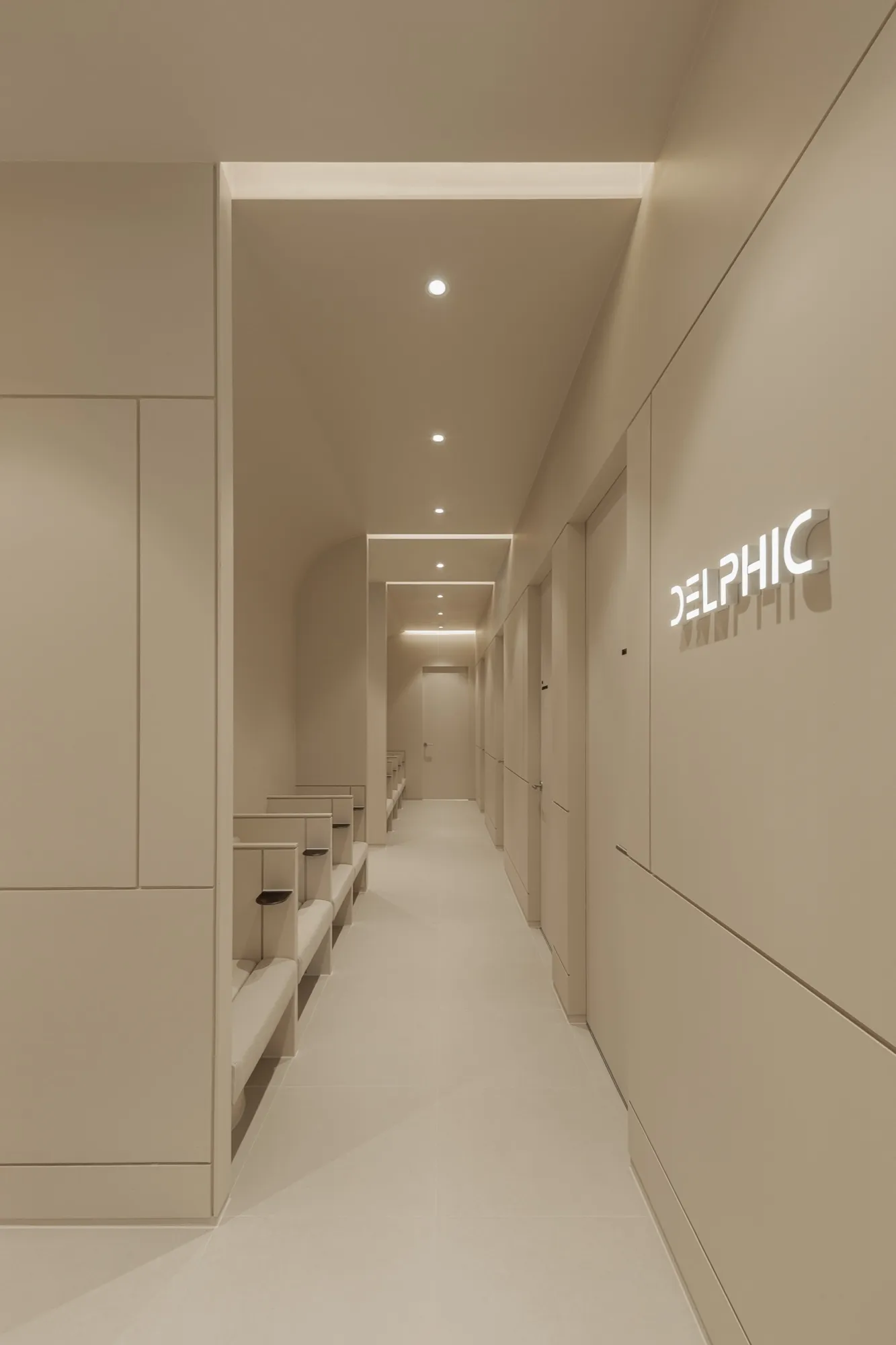
If you want to look at the treatment menu and the location before you write, the Delphic Clinic English home page has both.
What moves the cost of a thread lift
The number of threads is the biggest factor, followed by the thread type (cog or mono), how many areas are treated, and whether threads are combined with filler or a lifting device on the same visit. Counting threads works much like counting shots when you read Thermage reviews: a price or a result means little until you know how many went in. Prices are the same for local and foreign patients, with no foreigner surcharge.
To find out what your plan would cost, ask on WhatsApp with a front and a side photo; the exact figure for your case is given one-on-one in the free consultation.
Your first message
Send a front and a side photo of your jawline in daylight on WhatsApp, together with your flight dates, and ask what you should do if a thread end shows after you've flown home. The 1:1 consultation is free, an English interpreter is on site at no extra charge, and the clinic is directly connected to Exit 3 of Sinnonhyeon Station. Questions about the deposit and how you'd pay are settled after the consultation, so put those in the same message.
Verified Google reviews
4.7 · 260 Google reviewsI received ONDA lifting and Juvelook Skin treatment at Delpic Clinic. Before the procedure, Dr. K carefully examined my skin condition and explained everything in a kind and easy-to-understand way, which made me feel very comfortable and reassured. During the treatment, I could really tell that Dr. K was highly skilled, so I felt confident and at ease throughout the entire process. Overall, I was very satisfied with my experience. It’s definitely a clinic I would love to visit again.
I had a really great experience at Delphic Clinic. The staff were very friendly and made me feel comfortable from the moment I walked in. They explained everything clearly in English and didn’t try to oversell unnecessary treatments, which I really appreciated. The clinic is very clean and modern, and the whole process felt professional and well-organized. Overall, I would definitely recommend this clinic, especially if you’re a foreigner looking for a trustworthy place in Korea.
On the day, what I want to see in person is how your jowl moves when you lie back compared with sitting up, because that shows how much a thread will have to hold.
Get a free 1:1 consultation
Message our English-speaking team — same price as locals, no pressure.
Frequently asked questions
Can PDO threads be removed if I don't like how they feel?
In the first days or weeks, a thread that sits too close to the skin can sometimes be partly pulled out or trimmed. Because PDO dissolves over several months, doctors often wait for a mild irregularity to settle instead of removing anything.
How long does a PDO thread lift last?
The thread usually dissolves over several months. The firming from the collagen that forms around it can outlast the thread, but how long that lasts differs from person to person, so treat any fixed number of months with caution.
Do foreign patients pay more?
No. Delphic Clinic charges the same price to local and foreign patients, with no foreigner surcharge.
Can I get a facial or massage in Seoul after my threads?
Keep firm facial massage, gua sha and pressure on the face out of the first few weeks, because they can shift fresh threads. A body massage where you lie face-up, or a facial that doesn't press on the cheeks and jaw, is generally fine.
Should I see my dentist before or after the trip?
Before. Dental work means holding your mouth wide open, which strains fresh cog threads, so most doctors suggest waiting a few weeks after treatment. Book cleanings and fillings ahead of the trip.
Does a thread lift hurt?
Thread lifts are usually done with local numbing, so most people feel pressure and a pulling sensation, not sharp pain. The soreness people mention most comes afterwards, when chewing or yawning over the first few days, and it is usually stronger with cog threads.
Written by
Dr. Hyunji Kim
Dr. Hyunji Kim is the director and lead physician at Delphic Clinic in Gangnam, Seoul. She trained at Korea University Medical Center and personally performs consultations and procedures for both local and international patients.
Read next
Lifting
Thread Lift vs Fillers: Has Your Face Sagged or Lost Volume?
Threads reposition skin that has dropped; filler replaces volume that has gone. Many faces in their 30s and 40s show some of both, and some need neither yet. Here's how to tell which is yours.
Lifting
Korea Thermage FLX Complaints: Which Ones Should Worry You?
Most complaints about Thermage FLX describe pain during the session or a result judged too early. True adverse events are uncommon and mostly temporary, and the right questions at a consultation sort one from the other.
Lifting
Korea Thermage FLX Reviews Can't Judge Your Skin: What to Check Instead
Use reviews to build a shortlist, then check four things directly: who treats you, which device and tip are used, how your skin is assessed, and who helps if something goes wrong after you're home.